
The way people search for businesses is changing rapidly. For years, search engines like Google have been the primary destination for finding local services, products, and companies. Today, artificial intelligence (AI) assistants such as ChatGPT are becoming trusted sources for personalized recommendations. Instead of browsing through dozens of websites, users can simply ask questions like, “What is the best digital marketing agency for small businesses?” or “Which SEO company should I hire?” and receive a concise list of recommendations within seconds.
This shift marks the beginning of a new era in online discovery. Businesses that adapt to AI-powered search will gain a significant competitive advantage, while those relying solely on traditional SEO may miss valuable opportunities. Understanding how ChatGPT finds and recommends businesses has become essential for companies that want to increase visibility, attract qualified leads, and build long-term trust.
The Rise of AI-Powered Search
Artificial intelligence has transformed how users interact with information online. Rather than searching for keywords and comparing multiple websites, people now expect direct, conversational answers. ChatGPT analyzes user questions, understands intent, and provides recommendations that are relevant, reliable, and helpful.
For example, instead of searching:
- “Best restaurant near me”
- “Top SEO agency in India”
- “Affordable web design company”
Users increasingly ask:
- “Can you recommend a reliable SEO agency for a startup?”
- “Which digital marketing company has good customer reviews?”
- “What is the best website design agency for small businesses?”
This conversational approach saves time and delivers personalized responses, making AI assistants an increasingly important discovery channel.
Why Business Recommendations Matter More Than Ever
When ChatGPT recommends a business, it often carries more weight than a traditional advertisement. People tend to trust AI-generated suggestions because they expect them to be based on credible information rather than paid promotions.
A recommendation from ChatGPT can help businesses:
- Increase brand visibility
- Build customer trust
- Generate high-quality leads
- Improve website traffic
- Strengthen online authority
- Stand out from competitors
As AI adoption grows, businesses that consistently appear in trustworthy online sources are more likely to be recommended to potential customers.
How User Behavior Is Changing
Consumer behavior has evolved dramatically over the past few years. Modern buyers want instant answers instead of spending time comparing dozens of websites. Before making purchasing decisions, they seek recommendations that are personalized and relevant to their needs.
Whether someone is looking for:
- A digital marketing agency
- A lawyer
- A dentist
- An accountant
- A software company
- A local restaurant
Many users now prefer asking AI assistants for guidance instead of manually researching every option.
This means businesses must optimize not only for traditional search engines but also for AI-driven recommendation systems.
ChatGPT Doesn’t Randomly Recommend Businesses
One common misconception is that ChatGPT simply selects businesses at random. In reality, recommendations are influenced by several signals that indicate a business is trustworthy, authoritative, and helpful.
These signals include factors such as:
- A well-optimized website
- High-quality, informative content
- Strong online reputation
- Positive customer reviews
- Accurate business information
- Consistent branding across platforms
- Mentions on reputable websites
- Industry expertise and authority
Businesses with a strong digital presence are generally more likely to be surfaced in AI-assisted recommendations than those with limited or inconsistent information available online.
Why SEO Alone Is No Longer Enough
Traditional SEO remains important, but ranking on Google is only one piece of the puzzle. AI systems evaluate a broader range of information to determine which businesses appear trustworthy and relevant.
In addition to search engine optimization, businesses should focus on:
- Creating helpful, experience-based content
- Demonstrating expertise in their field
- Building a strong brand reputation
- Keeping business information accurate and consistent
- Earning mentions from reputable websites
- Maintaining active and credible online profiles
This broader approach is often referred to as Generative Engine Optimization (GEO)—optimizing content and online presence so AI-powered platforms can better understand and recommend your business.
The Opportunity for Businesses
The growing use of AI assistants presents a significant opportunity. Companies that invest in trustworthy content, customer experience, and digital authority today are positioning themselves for greater visibility in the future.
Rather than competing only for search engine rankings, businesses can also become part of AI-generated recommendations that users increasingly rely on when making decisions.
Whether you run a local service business, an eCommerce store, a healthcare clinic, a law firm, or a digital marketing agency, understanding how ChatGPT identifies and recommends businesses can help you attract more qualified customers and stay ahead of competitors.
What You’ll Learn in This Guide
In this comprehensive guide, you’ll discover:
- How ChatGPT understands user queries and intent.
- The factors that influence business recommendations.
- The role of SEO, E-E-A-T, and Generative Engine Optimization (GEO).
- Why online reviews, reputation, and authoritative content matter.
- Practical strategies to improve your chances of being recommended by AI-powered platforms.
By the end of this guide, you’ll have a clear understanding of how businesses can build the trust, visibility, and authority needed to thrive in the age of AI-powered search and recommendations.
How ChatGPT Understands User Intent Before Recommending Businesses
One of the biggest strengths of ChatGPT is its ability to understand user intent rather than simply matching keywords. Unlike traditional search engines that primarily rely on exact search terms, ChatGPT analyzes the meaning, context, and purpose behind a user’s question. This allows it to provide more personalized, relevant, and helpful business recommendations. Whether someone is looking for a local restaurant, a digital marketing agency, a healthcare provider, or a software company, ChatGPT first tries to understand what the user truly wants to achieve before suggesting any businesses.
For example, if a user asks, “Which digital marketing agency is best for a small business with a limited budget?”, ChatGPT doesn’t only focus on the phrase “digital marketing agency.” It recognizes that the user is a small business owner, has budget constraints, and is searching for an agency that delivers cost-effective services and measurable results. This deeper understanding enables ChatGPT to tailor its response to the user’s specific needs rather than offering a generic list of agencies.
Similarly, when someone asks, “Can you recommend an SEO company for an eCommerce website?”, ChatGPT identifies several layers of intent. It understands that the user requires SEO expertise specifically for eCommerce, which may involve product page optimization, technical SEO, category page improvements, and increasing online sales. Instead of recommending any SEO provider, ChatGPT is more likely to suggest businesses with relevant expertise in that niche.
Understanding Different Types of Search Intent
Before making recommendations, ChatGPT evaluates the type of intent behind every query. Generally, user intent falls into four categories:
1. Informational Intent
The user wants to learn something rather than make an immediate purchase.
Examples:
- What is local SEO?
- How does Google Ads work?
- Why is digital marketing important?
In these cases, ChatGPT focuses on providing educational content instead of recommending businesses.
2. Commercial Intent
The user is researching options before making a decision.
Examples:
- Best digital marketing agency for startups
- Top SEO companies in India
- Which CRM software is best?
Here, ChatGPT evaluates trustworthy businesses, industry reputation, expertise, and user needs before making recommendations.
3. Transactional Intent
The user is ready to hire or buy.
Examples:
- Hire a web design agency
- Find an SEO consultant near me
- Book a social media marketing company
Since the user is close to making a purchase, ChatGPT prioritizes businesses that appear reliable, authoritative, and capable of fulfilling the request.
4. Local Intent
Many users are searching for businesses in a specific geographic location.
Examples:
- Best dentist in Mumbai
- Top restaurant near me
- SEO agency in Indore
When location matters, ChatGPT considers geographic relevance along with the quality and credibility of businesses.
Context Matters More Than Keywords
ChatGPT also pays close attention to the context of a conversation. Unlike traditional search engines where every query is often treated independently, ChatGPT remembers the ongoing discussion within the conversation. If a user has already mentioned their industry, budget, goals, or preferences, ChatGPT uses that context to refine future recommendations.
3. The Key Factors ChatGPT Uses to Find Trusted Businesses
ChatGPT recommends businesses based on a combination of relevance, credibility, authority, and the quality of publicly available information. Rather than relying on a single ranking factor, it evaluates multiple trust signals to determine whether a business is likely to provide value to users. These signals include a well-structured website, high-quality content, positive customer reviews, accurate business information, industry expertise, and mentions on reputable websites.
Businesses that consistently demonstrate transparency, professionalism, and customer satisfaction are more likely to be viewed as trustworthy. Additionally, ChatGPT considers whether a company has a strong online presence across multiple platforms, including its website, business directories, social media, and industry publications. The more reliable and consistent your digital footprint is, the better your chances of being recognized as a trusted business in AI-powered recommendations.
4. Why Website SEO Still Plays a Critical Role
Even in the age of artificial intelligence, Search Engine Optimization (SEO) remains one of the most important foundations for online visibility. A well-optimized website helps search engines and AI systems understand what your business offers, who your target audience is, and why your content deserves attention. Strong SEO includes optimized page titles, descriptive meta descriptions, proper heading structures, keyword-focused content, fast loading speeds, mobile responsiveness, internal linking, and secure HTTPS connections. Technical SEO also ensures that your website is easily crawlable and indexable, allowing AI systems to access accurate information. Businesses that regularly publish valuable, SEO-friendly content not only improve their Google rankings but also increase the likelihood of being referenced or recommended by AI assistants like ChatGPT.
5. How Google Business Profile Influences ChatGPT Recommendations
A well-maintained Google Business Profile (GBP) significantly strengthens your online credibility. Although ChatGPT does not directly rank businesses based solely on GBP listings, accurate business information contributes to a stronger digital presence. A complete profile containing your business name, address, phone number, operating hours, website link, services, high-quality images, and customer reviews helps establish trust across the web. Regularly updating your profile with posts, responding to customer reviews, and selecting the correct business categories also improves consistency. Since AI systems rely on publicly available and trustworthy information, businesses with complete and verified Google Business Profiles are generally easier to identify as legitimate and reliable organizations.
6. The Importance of Reviews, Reputation, and Brand Authority
Customer reviews and online reputation have become powerful indicators of trust. Positive reviews on platforms such as Google, industry directories, and other reputable websites demonstrate real customer experiences and satisfaction. Businesses that consistently receive authentic reviews, respond professionally to customer feedback, and maintain high ratings build stronger credibility over time. Brand authority extends beyond reviews and includes media mentions, industry recognition, awards, expert contributions, and partnerships with respected organizations. When multiple trusted sources consistently recognize a business as reliable and knowledgeable, AI systems gain greater confidence in recommending that business. Building a positive reputation is therefore an ongoing process that combines excellent customer service with a strong online presence.
7. How AI Values Helpful Content, E-E-A-T, and GEO (Generative Engine Optimization)
Modern AI systems prioritize content that is genuinely helpful, accurate, and written with users in mind. Google’s E-E-A-T framework—Experience, Expertise, Authoritativeness, and Trustworthiness—has become increasingly important for both search engines and AI-powered assistants. Businesses should publish detailed guides, educational blogs, case studies, FAQs, and original insights that demonstrate real-world experience. At the same time, Generative Engine Optimization (GEO) focuses on creating content that AI models can easily understand, summarize, and reference. Clear headings, structured formatting, factual information, updated content, schema markup, and comprehensive topic coverage all improve AI comprehension. Instead of creating content solely for rankings, businesses should focus on answering real customer questions with valuable and trustworthy information.
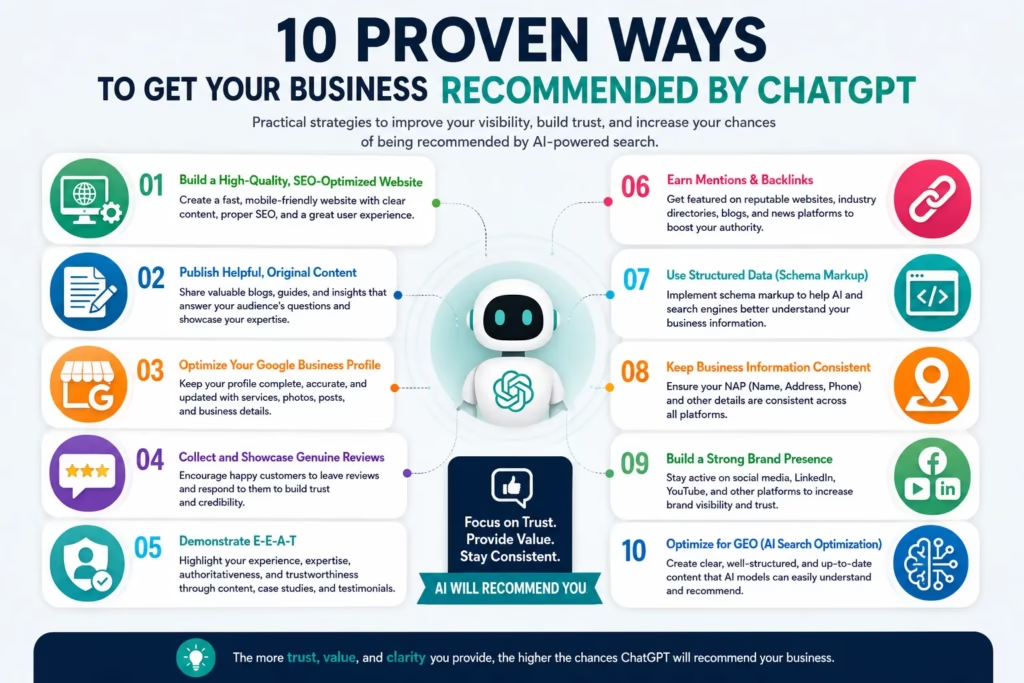
10 Proven Ways to Get Your Business Recommended by ChatGPT
Businesses can significantly improve their chances of appearing in AI recommendations by following proven digital marketing practices. First, maintain a fast, secure, and SEO-optimized website. Second, publish high-quality content that answers customer questions. Third, optimize and regularly update your Google Business Profile. Fourth, encourage genuine customer reviews and respond to them professionally. Fifth, build backlinks and mentions from authoritative websites.
Sixth, demonstrate expertise through case studies, success stories, and thought leadership articles. Seventh, keep your business information consistent across all online directories. Eighth, implement structured data (Schema Markup) to help AI understand your website. Ninth, establish a strong presence on trusted platforms such as LinkedIn, Medium, industry directories, and reputable publications. Finally, continuously update your content to reflect the latest industry trends and customer needs. These combined efforts create a trustworthy digital footprint that AI systems are more likely to recognize.
Common Mistakes That Prevent Businesses from Being Recommended
Many businesses unknowingly reduce their chances of being recommended by AI because of avoidable mistakes. One of the most common issues is having an outdated website with inaccurate information or poor user experience. Thin content, duplicate articles, keyword stuffing, and AI-generated content without human review can also reduce credibility. Inconsistent business details across directories create confusion and weaken trust.
Ignoring customer reviews, failing to update Google Business Profile information, and lacking clear service descriptions further diminish authority. Some businesses also overlook technical SEO issues such as slow page speeds, broken links, missing meta tags, or poor mobile optimization. Focusing only on search rankings instead of creating genuinely helpful content is another mistake. Businesses that prioritize user value, transparency, and consistency are far more likely to gain visibility in AI-powered search.
1. Build a High-Quality, SEO-Optimized Website
Your website is the foundation of your online presence. ChatGPT relies on publicly available information, so your website should clearly explain who you are, what services you offer, and why customers should trust your business. Optimize every page with relevant keywords, compelling meta titles and descriptions, fast loading speeds, mobile responsiveness, secure HTTPS, and easy navigation. A technically sound website makes it easier for search engines and AI systems to understand your business.
2. Publish Helpful, Original, and Expert Content
AI values content that genuinely helps users solve problems. Instead of creating promotional articles, publish blogs, guides, tutorials, FAQs, case studies, and industry insights that answer real customer questions. Demonstrate your expertise by sharing practical advice and real-world experience. High-quality content not only improves SEO but also increases your authority, making your business a more reliable source for AI-generated recommendations.
3. Strengthen Your Google Business Profile
A complete and regularly updated Google Business Profile increases your online credibility. Ensure that your business name, address, phone number, website, operating hours, services, and business categories are accurate. Add high-quality photos, publish regular updates, and respond to customer reviews. Consistent business information across platforms helps AI recognize your business as trustworthy and legitimate.
4. Collect Genuine Customer Reviews
Customer reviews are one of the strongest indicators of trust. Encourage satisfied customers to leave honest reviews on Google and other reputable platforms. Respond professionally to both positive and negative feedback to demonstrate excellent customer service. Businesses with a strong reputation and authentic customer experiences are more likely to gain credibility in AI-driven recommendations.
5. Demonstrate E-E-A-T (Experience, Expertise, Authoritativeness, and Trustworthiness)
Google’s E-E-A-T principles are equally valuable for AI-powered search. Showcase your industry knowledge through detailed service pages, author profiles, certifications, client testimonials, awards, and successful case studies. Clearly communicate your experience and qualifications so both users and AI systems can recognize your authority in your field.
6. Earn Mentions and Backlinks from Trusted Websites
When respected websites mention your business or link to your content, it strengthens your online authority. Focus on earning backlinks through guest blogging, digital PR, partnerships, industry directories, podcasts, interviews, and high-quality content that others naturally reference. Trusted mentions signal that your business is reputable and recognized within your industry.
7. Use Structured Data (Schema Markup)
Schema markup helps search engines and AI systems better understand the content on your website. Implement structured data for your business information, products, services, reviews, FAQs, articles, and local business details. This additional context improves your website’s machine readability and can enhance your visibility across AI-powered platforms.
8. Maintain Consistent Business Information Everywhere
Consistency builds trust. Ensure your business name, address, phone number (NAP), website URL, email address, and branding remain identical across your website, Google Business Profile, social media platforms, and online directories. Inconsistent information can confuse search engines and AI systems, reducing confidence in your business’s legitimacy.
9. Build a Strong Brand Presence Across the Web
Businesses with an active digital footprint are easier for AI to recognize. Publish valuable content on platforms such as LinkedIn, Medium, YouTube, Quora, Reddit, and industry-specific websites. Participate in webinars, podcasts, interviews, and online communities where your expertise can be showcased. The more authoritative mentions your brand receives across trusted sources, the stronger your online reputation becomes.
10. Keep Your Content Updated and Optimize for Generative Engine Optimization (GEO)
AI favors fresh, relevant, and well-maintained content. Regularly update your blogs, service pages, FAQs, and case studies with the latest information, statistics, and industry trends. Embrace Generative Engine Optimization (GEO) by creating content that is structured, comprehensive, conversational, and easy for AI systems to understand. Use descriptive headings, answer frequently asked questions, include actionable insights, and focus on solving user problems rather than simply targeting keywords. Businesses that continuously improve their content are more likely to remain visible in the evolving landscape of AI search.
Final Thoughts: Future-Proof Your Business for AI Search
Artificial intelligence is transforming the way people discover products, services, and businesses online. As more users rely on ChatGPT and other AI assistants for recommendations, businesses must expand their digital marketing strategies beyond traditional SEO. Building trust, publishing valuable content, maintaining an optimized website, collecting authentic customer reviews, strengthening brand authority, and embracing Generative Engine Optimization (GEO) are becoming essential for long-term success. The businesses that consistently demonstrate expertise, transparency, and customer value will be better positioned to appear in AI-generated recommendations. By investing in both SEO and AI-focused optimization today, your business can stay competitive, increase online visibility, attract high-quality leads, and thrive in the future of AI-powered search.
Frequently Asked Questions (FAQs)
1. How does ChatGPT recommend businesses?
ChatGPT recommends businesses by considering factors such as website quality, SEO, online reputation, customer reviews, brand authority, helpful content, and publicly available information from trusted sources.
2. Can I pay ChatGPT to recommend my business?
No. ChatGPT does not accept payments or sponsored placements for business recommendations. Recommendations are based on relevance, credibility, and available information.
3. Does SEO help my business appear in ChatGPT recommendations?
Yes. A well-optimized website with quality content, technical SEO, and strong online authority improves your chances of being recognized by AI-powered search systems.
4. What is Generative Engine Optimization (GEO)?
Generative Engine Optimization (GEO) is the practice of optimizing your website and content so AI tools like ChatGPT can better understand, reference, and recommend your business.
5. Do Google Business Profile and customer reviews matter?
Absolutely. An optimized Google Business Profile and authentic customer reviews strengthen your business’s credibility and improve its overall online presence.
6. What type of content does ChatGPT prefer?
ChatGPT values helpful, original, well-structured, and informative content that answers users’ questions and demonstrates real expertise and experience.
7. Can a new business get recommended by ChatGPT?
Yes. Even new businesses can improve their chances by creating valuable content, maintaining accurate business information, earning positive reviews, and building a trustworthy online presence.
8. What are the biggest mistakes businesses make?
Common mistakes include poor website SEO, outdated content, inconsistent business information, ignoring customer reviews, weak online authority, and focusing only on keywords instead of user value.
Author Bio
About the Author
Takshika Sakhare is an experienced SEO Strategist, Content Writer, and Digital Marketing Specialist at StubbSpire Digital Marketing Agency. With extensive expertise in Search Engine Optimization (SEO), Google Ads, Local SEO, AI Search Optimization, and Generative Engine Optimization (GEO), Ananya helps businesses improve their online visibility, attract qualified leads, and build sustainable digital growth.
Passionate about the latest advancements in AI-powered search, Ananya creates practical, research-driven content that simplifies complex digital marketing concepts into actionable strategies. Her articles focus on helping startups, small businesses, healthcare providers, eCommerce brands, and service-based companies stay ahead of evolving search technologies and Google’s best practices.
Through StubbSpire Digital Marketing Agency, she is dedicated to empowering businesses with innovative SEO strategies, high-quality content marketing, and AI-ready optimization techniques that drive measurable results in the rapidly changing digital landscape.