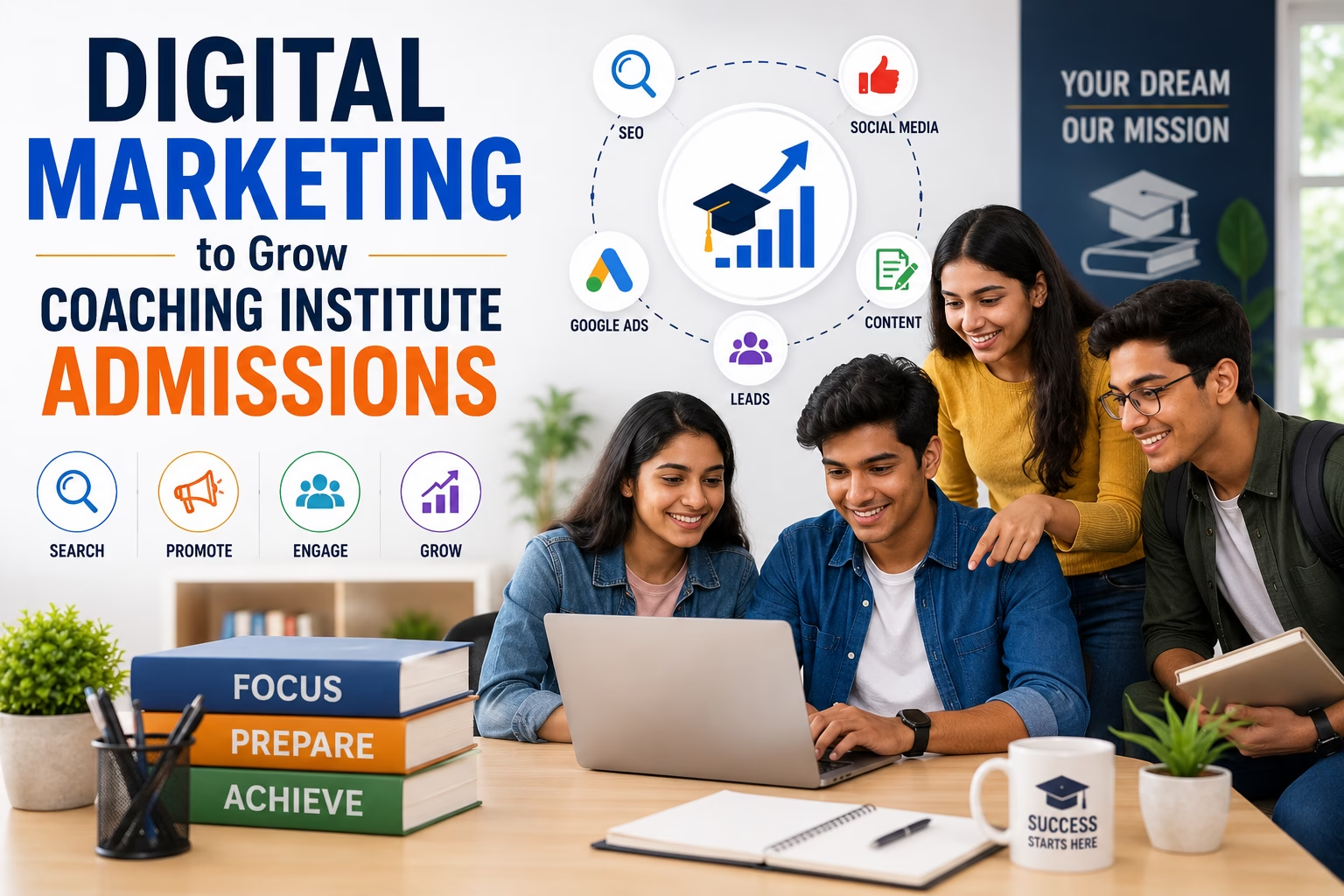
In today’s digital-first world, students and parents no longer depend solely on newspaper advertisements, pamphlets, or word-of-mouth recommendations to find the right coaching institute. Instead, they search on Google, browse social media, watch educational videos on YouTube, read online reviews, and compare multiple institutes before making an enrollment decision. This shift in behavior has made digital marketing for coaching institutes one of the most effective ways to attract prospective students and increase admissions.
Digital marketing for coaching institutes is the strategic use of online platforms, tools, and technologies to promote educational programs, build brand awareness, generate high-quality student leads, and convert those leads into admissions. It enables coaching centers to reach students and parents at every stage of their decision-making journey—from discovering an institute to completing the admission process.
Unlike traditional marketing, which often targets a broad audience with limited tracking, digital marketing allows coaching institutes to reach highly specific audiences based on factors such as age, location, educational interests, search behavior, and career goals. Whether you operate a local tuition center or a nationwide coaching brand, digital marketing helps you connect with the right students at the right time.
Why Digital Marketing Matters for Coaching Institutes
The education sector has become increasingly competitive. Thousands of coaching institutes compete for the attention of students preparing for competitive exams like JEE, NEET, UPSC, SSC, Banking, CAT, CUET, CLAT, IELTS, and various school or college entrance exams. Simply offering excellent teaching is no longer enough. If students cannot find your institute online, they are likely to choose a competitor with a stronger digital presence.
Digital marketing helps coaching institutes:
- Increase online visibility and brand recognition.
- Reach students actively searching for coaching classes.
- Build credibility through educational content and student testimonials.
- Generate qualified admission inquiries consistently.
- Improve student engagement across multiple digital channels.
- Measure marketing performance using real-time analytics.
Key Components of Digital Marketing for Coaching Institutes
A successful digital marketing strategy combines multiple channels that work together to attract, engage, and convert prospective students.
1. Search Engine Optimization (SEO)
SEO helps your coaching institute appear higher in Google search results when students search for keywords like:
- Best coaching institute near me
- JEE coaching in Delhi
- NEET coaching classes
- UPSC coaching online
By optimizing your website with relevant keywords, high-quality content, fast loading speed, and a user-friendly experience, SEO generates organic traffic without paying for every click. Over time, this becomes one of the most cost-effective methods for attracting students.
2. Google Ads (Pay-Per-Click Advertising)
Google Ads allows coaching institutes to appear at the top of search results immediately. This is especially useful during admission seasons when students actively search for coaching programs.
Benefits include:
- Instant visibility
- Location-based targeting
- Budget control
- High-intent lead generation
- Measurable ROI
3. Social Media Marketing
Platforms such as Facebook, Instagram, LinkedIn, and YouTube help coaching institutes connect with students and parents through engaging content.
Popular content includes:
- Success stories
- Student testimonials
- Classroom activities
- Faculty introductions
- Educational tips
- Live doubt-solving sessions
- Admission announcements
Consistent social media activity increases trust, engagement, and brand awareness.
4. Content Marketing
Students and parents prefer institutes that demonstrate expertise before asking for admissions. Content marketing helps achieve this by publishing valuable educational resources.
Examples include:
- Blog articles
- Exam preparation guides
- Study tips
- Free eBooks
- Mock tests
- Practice questions
- Career counseling articles
- Video tutorials
Quality content positions your coaching institute as an authority while improving SEO rankings.
5. Email and WhatsApp Marketing
Not every student enrolls during their first interaction. Email marketing and WhatsApp campaigns help nurture potential students by sending:
- Admission reminders
- Course details
- Scholarship announcements
- Webinar invitations
- Exam updates
- Study materials
Regular communication keeps your institute top of mind until students are ready to enroll.
6. Online Reputation Management
Before taking admission, students often check Google reviews and ratings. Positive reviews significantly influence enrollment decisions.
Encourage satisfied students to leave genuine reviews and respond professionally to all feedback. A strong online reputation builds trust and increases conversions.
Benefits of Digital Marketing for Coaching Institutes
Digital marketing offers several advantages over traditional advertising methods.
- Generates qualified student leads consistently.
- Reduces overall marketing costs.
- Improves admission conversion rates.
- Builds long-term brand credibility.
- Increases website traffic through SEO.
- Expands reach beyond your local area.
- Enables precise audience targeting.
- Provides measurable performance reports.
- Supports both offline and online coaching programs.
- Delivers sustainable business growth.
How Digital Marketing Supports Every Stage of Student Enrollment
Digital marketing is effective because it guides prospective students through the complete admission journey.
Awareness: Students discover your coaching institute through Google searches, social media, YouTube, or online advertisements.
Interest: They visit your website, read blogs, watch demo lectures, explore courses, and compare your institute with competitors.
Consideration: Reviews, testimonials, faculty profiles, and success stories build confidence in your coaching programs.
Decision: Students fill out inquiry forms, contact your counselors, attend demo classes, and complete the admission process.
The Future of Coaching Institute Marketing
As technology continues to evolve, digital marketing is becoming even more important. Artificial intelligence, voice search, personalized advertising, automation, and data-driven marketing are changing how coaching institutes attract and retain students. Institutes that invest in a strong digital presence today will be better positioned to compete, scale their admissions, and build lasting relationships with students in the years ahead.
Benefits of Digital Marketing for Coaching Institutes
| Benefit | Impact on Admissions |
|---|---|
| Better Google Visibility | More students discover your institute online |
| Targeted Advertising | Reach students actively searching for coaching |
| Higher Brand Trust | Positive reviews and quality content improve credibility |
| Cost-Effective Marketing | Better ROI than traditional advertising |
| Quality Lead Generation | Attract students who are more likely to enroll |
| Measurable Results | Track inquiries, conversions, and ROI |
| Stronger Student Engagement | Build lasting relationships through social media and messaging |
| Sustainable Growth | Consistent admissions through long-term digital strategies |
The education industry has become more competitive than ever before. Every year, thousands of coaching institutes compete to attract students preparing for competitive exams such as JEE, NEET, UPSC, SSC, Banking, CAT, CUET, CLAT, IELTS, and various school entrance examinations. While the quality of education remains the most important factor, it is no longer enough to guarantee consistent admissions. If students cannot easily find your institute online, they are likely to choose a competitor with a stronger digital presence. This is why digital marketing has become an essential growth strategy for coaching institutes that want to increase admissions and build a trusted brand.
Today’s students and parents begin their search for coaching classes online. Before visiting an institute or speaking with an admissions counselor, they usually search on Google, compare websites, read reviews, watch demo lectures on YouTube, browse social media pages, and evaluate faculty credentials. Their decision is influenced not only by academic performance but also by the information they find online. A coaching institute with a professional website, positive reviews, useful educational content, and active social media channels immediately creates a stronger first impression than one with little or no online visibility. Digital marketing ensures that your institute appears where prospective students are already searching, giving you a significant advantage over competitors.
One of the greatest strengths of digital marketing is its ability to connect coaching institutes with highly targeted audiences. Unlike traditional advertising methods that reach a broad audience regardless of interest, digital marketing allows institutes to focus on students who are actively looking for coaching programs. Whether someone searches for “best NEET coaching near me,” “JEE coaching classes,” or “UPSC preparation institute,” an effective SEO strategy and well-optimized Google Ads campaign can place your institute directly in front of potential students at the exact moment they are ready to make a decision. This targeted approach improves lead quality and significantly increases the chances of converting inquiries into admissions.
Another major reason digital marketing is essential is that it helps build trust before students even contact your institute. Choosing a coaching center is a major investment for both students and parents, so they naturally spend time researching different options. They want to know about faculty experience, student success rates, classroom facilities, teaching methods, and previous results. Through blogs, videos, student testimonials, Google reviews, success stories, and educational resources, digital marketing allows coaching institutes to demonstrate their expertise and credibility. When students repeatedly encounter valuable and informative content from your institute, they begin to view it as a reliable authority, making them more confident about enrolling.
Search Engine Optimization (SEO) also plays a crucial role in increasing admissions. A well-optimized website can rank on the first page of Google for keywords that students frequently search. Unlike paid advertisements, SEO continues generating organic traffic over the long term, making it one of the most cost-effective digital marketing strategies. Every visitor who reaches your website through search engines is a potential admission inquiry, especially when your content answers their questions and provides clear information about your courses and admission process.
Social media has transformed the way coaching institutes communicate with prospective students. Platforms like Instagram, Facebook, YouTube, and LinkedIn provide opportunities to share educational tips, exam preparation strategies, faculty introductions, classroom activities, student achievements, and live sessions. Regular interaction through these platforms helps institutes remain visible and relevant while building stronger relationships with students. Since many young learners spend several hours each day on social media, maintaining an active presence increases brand awareness and encourages more inquiries.
Digital marketing also allows coaching institutes to nurture potential students throughout their admission journey. Most students do not enroll immediately after discovering an institute. They often compare several options before making a final decision. Through email marketing, WhatsApp communication, remarketing campaigns, and personalized follow-ups, institutes can stay connected with interested students by sharing admission updates, scholarship announcements, free study materials, webinar invitations, and important deadlines. Consistent communication keeps the institute at the top of the student’s mind and improves conversion rates.
Another significant advantage of digital marketing is its ability to measure performance accurately. Traditional marketing methods such as newspaper advertisements, pamphlets, banners, and radio promotions often make it difficult to determine how many admissions they actually generate. Digital marketing provides detailed insights into every stage of the customer journey. Coaching institutes can track website traffic, keyword rankings, advertisement performance, inquiry forms, conversion rates, and return on investment using analytics tools. This data enables institutions to identify successful campaigns, optimize underperforming strategies, and allocate marketing budgets more efficiently.
Cost-effectiveness is another reason why digital marketing has become indispensable for coaching institutes. Compared to traditional advertising, digital campaigns often require lower investment while delivering better targeting and measurable outcomes. Even smaller coaching centers with limited budgets can compete effectively by focusing on local SEO, social media marketing, content marketing, and targeted Google Ads. Instead of spending heavily on broad advertising campaigns, they can invest in strategies that generate qualified leads and produce long-term results.
As technology continues to evolve, the importance of digital marketing will only continue to grow. Students increasingly expect educational institutions to have modern websites, active social media profiles, online counseling options, and valuable educational content. Coaching institutes that fail to establish a strong digital presence risk losing potential admissions to competitors who are more visible and accessible online. On the other hand, institutes that consistently invest in digital marketing can strengthen their reputation, reach more students, improve admission numbers, and achieve sustainable growth year after year.
Ultimately, digital marketing is no longer just a promotional tool for coaching institutes—it has become a fundamental part of their admissions strategy. By increasing online visibility, building credibility, attracting qualified leads, and maintaining continuous engagement with prospective students, digital marketing empowers coaching institutes to thrive in an increasingly competitive education landscape and secure long-term success.
These are excellent H2 headings for your blog. Below is detailed, SEO-friendly content for each section in paragraph format, naturally using the focus keyword digital marketing throughout.
Top Digital Marketing Strategies for Coaching Institutes
A successful digital marketing strategy for coaching institutes combines multiple online channels to attract prospective students, build trust, and increase admissions. Instead of relying on a single marketing method, institutes should integrate SEO, social media marketing, Google Ads, content marketing, email campaigns, WhatsApp communication, and online reputation management into one cohesive strategy. Each channel plays a different role in guiding students through the admission journey.
The first step is building a professional, mobile-friendly website that clearly showcases courses, faculty, student success stories, fee structures, and admission details. A well-designed website becomes the foundation of every digital marketing campaign because it is where prospective students learn about your institute and submit inquiries. Alongside a strong website, coaching institutes should consistently publish educational blogs, exam preparation guides, FAQs, and success stories that answer students’ questions and improve search engine rankings.
Investing in local SEO is equally important because many students search for coaching classes within their city or neighborhood. Optimizing your Google Business Profile, collecting positive reviews, and maintaining accurate contact information help your institute appear in local search results and Google Maps. Social media platforms such as Instagram, Facebook, YouTube, and LinkedIn allow coaching institutes to share educational videos, classroom updates, live sessions, and student achievements, creating stronger engagement and brand awareness.
Paid advertising through Google Ads and Meta Ads provides immediate visibility during admission seasons, while email and WhatsApp marketing nurture interested students until they are ready to enroll. When these digital marketing strategies work together, coaching institutes create multiple opportunities to reach prospective students, increase inquiries, and improve admission rates.
How SEO Helps Coaching Institutes Rank Higher on Google
Search Engine Optimization (SEO) is one of the most powerful components of digital marketing because it helps coaching institutes appear in Google’s organic search results when students search for coaching programs. Every day, thousands of students search phrases such as “best coaching institute near me,” “JEE coaching classes,” or “NEET coaching in Mumbai.” If your website ranks on the first page, you receive qualified visitors who are already interested in your services.
SEO begins with keyword research to understand what students and parents are searching for. These keywords should naturally appear in website pages, blog articles, headings, image alt text, and meta descriptions. However, modern SEO goes beyond keywords. Google also evaluates website speed, mobile responsiveness, user experience, content quality, page structure, and security.
Publishing informative blogs about exam preparation, admission tips, career guidance, and frequently asked questions helps coaching institutes demonstrate expertise while attracting organic traffic. Local SEO further improves visibility by optimizing the Google Business Profile, collecting authentic reviews, and targeting location-specific keywords. Unlike paid advertisements, SEO continues generating traffic over the long term, making it one of the most sustainable digital marketing investments for coaching institutes.
Social Media Marketing Tips for Coaching Institutes
Social media has become one of the most influential digital marketing channels for educational institutions because students spend a significant portion of their time on platforms like Instagram, Facebook, YouTube, and LinkedIn. Instead of using social media solely for promotional posts, coaching institutes should focus on creating educational and engaging content that provides genuine value.
Sharing short study tips, exam updates, motivational content, faculty introductions, classroom activities, student success stories, and live doubt-solving sessions helps build credibility and strengthen relationships with prospective students. Educational videos explaining important concepts or exam strategies often generate higher engagement and establish the institute as an authority in its field.
Consistency is equally important. Posting regularly, responding quickly to comments and messages, and encouraging students to share testimonials creates an active online community. Social media advertising can further increase reach by targeting students based on age, location, educational interests, and exam preferences. Combined with organic engagement, social media marketing helps coaching institutes expand their audience, improve brand recognition, and generate more admission inquiries.
Google Ads and PPC for Faster Student Admissions
While SEO produces long-term results, Google Ads offers immediate visibility, making it an essential part of any digital marketing strategy for coaching institutes. During admission seasons, students actively search for coaching programs, and Google Ads places your institute at the top of search results when they use relevant keywords.
Pay-Per-Click (PPC) advertising allows coaching institutes to target students by location, course interest, age, language, and search intent. Since advertisers only pay when someone clicks the advertisement, budgets can be managed efficiently while attracting highly qualified leads.
Effective Google Ads campaigns include compelling headlines, clear calls to action, optimized landing pages, and inquiry forms that encourage students to request counseling or register for demo classes. Retargeting advertisements can also reconnect with visitors who previously visited the website but did not complete the admission process. When optimized correctly, PPC advertising delivers faster inquiries, better lead quality, and improved admission conversions.
Content Marketing to Build Trust and Attract Students
Content marketing is one of the most valuable forms of digital marketing because it focuses on educating rather than simply promoting. Students and parents naturally trust coaching institutes that consistently provide useful information before asking for admissions.
Publishing blogs, exam preparation guides, study schedules, career advice, frequently asked questions, downloadable eBooks, mock tests, and educational videos positions your institute as an expert in the education sector. Quality content answers students’ questions while improving search engine rankings through SEO.
Video content has become especially effective because students enjoy learning through visual demonstrations. Faculty interviews, classroom sessions, success stories, and recorded webinars help prospective students understand the teaching quality before enrolling. High-quality content not only attracts website visitors but also increases trust, improves engagement, and supports long-term brand building.
Email and WhatsApp Marketing for Student Engagement
Generating inquiries is only the beginning of the admission journey. Many students require multiple interactions before making their final decision. This is where email and WhatsApp marketing become valuable components of digital marketing.
Personalized email campaigns can introduce courses, explain admission procedures, announce scholarships, provide study resources, and remind students about upcoming deadlines. Well-designed email sequences help maintain consistent communication without overwhelming prospective students.
WhatsApp marketing offers even faster communication because students are more likely to read instant messages than emails. Coaching institutes can send demo class invitations, fee updates, admission reminders, webinar links, and important announcements directly to interested students. Since WhatsApp conversations feel more personal, they often generate higher engagement and quicker responses. Together, email and WhatsApp marketing improve student relationships and significantly increase admission conversions.
How to Measure Digital Marketing Success for Coaching Institutes
One of the greatest advantages of digital marketing is the ability to measure campaign performance accurately. Unlike traditional advertising, digital marketing provides detailed data that helps coaching institutes understand which strategies are producing the best results.
Monitoring website traffic reveals how many visitors are discovering your institute through search engines, advertisements, or social media. Keyword rankings show whether SEO efforts are improving visibility on Google, while conversion tracking measures how many visitors complete inquiry forms or request counseling.
Institutes should also evaluate cost per lead, return on advertising investment, click-through rates, engagement on social media, email open rates, and admission conversion percentages. These performance indicators help marketing teams identify successful campaigns and optimize underperforming strategies. Regular analysis ensures continuous improvement while maximizing the effectiveness of marketing budgets.
Future Digital Marketing Trends for Coaching Institutes in 2026
The future of digital marketing will be shaped by artificial intelligence, automation, personalization, and changing student behavior. Coaching institutes that embrace these innovations will gain a competitive advantage in attracting prospective students.
Artificial Intelligence (AI) will increasingly support personalized learning recommendations, automated chatbots, predictive analytics, and intelligent customer support. Students will expect instant responses, customized communication, and seamless digital experiences across websites and messaging platforms.
Voice search optimization will become more important as students use smart devices to search for coaching classes through natural language queries. Short-form educational videos on YouTube Shorts, Instagram Reels, and similar platforms will continue to influence student engagement. At the same time, Google will place greater emphasis on high-quality, experience-based content that demonstrates expertise and trustworthiness.
Data-driven marketing, marketing automation, interactive webinars, virtual counseling sessions, and personalized email campaigns will further transform student recruitment. Coaching institutes that continuously adapt their digital marketing strategies to these emerging trends will be better positioned to increase admissions, strengthen their brand reputation, and achieve sustainable growth in the years ahead.
Case Study: How Digital Marketing Increased Coaching Institute Admissions
A coaching institute offering JEE and NEET preparation struggled to attract new students despite delivering excellent academic results. Its marketing relied mainly on newspaper ads and word-of-mouth referrals, resulting in inconsistent admission inquiries.
The institute adopted a digital marketing strategy that included SEO, Google Ads, social media marketing, and regular educational blog content. It also optimized its website, improved its Google Business Profile, and shared student success stories and demo lectures across social media platforms.
Within six months, the institute experienced a significant increase in website traffic, more qualified student inquiries, and a higher admission conversion rate. By building a strong online presence and engaging prospective students through multiple digital channels, the institute successfully increased admissions while reducing its overall cost per lead.
Frequently Asked Questions (FAQs)
1. Why is digital marketing important for coaching institutes?
Digital marketing helps coaching institutes reach students where they spend most of their time—online. It improves visibility on search engines, builds credibility through valuable content, generates qualified leads, and increases admissions with measurable results.
2. Which digital marketing strategy works best for coaching institutes?
There is no single best strategy. A combination of SEO, Google Ads, social media marketing, content marketing, email marketing, and WhatsApp marketing delivers the best long-term results. Using multiple channels ensures consistent student inquiries and higher admission rates.
3. How long does SEO take to increase admissions?
SEO is a long-term digital marketing strategy. Most coaching institutes begin seeing noticeable improvements in website traffic and rankings within 3 to 6 months, while competitive keywords may take longer. The results are sustainable and continue to generate organic leads over time.
4. Can small coaching institutes benefit from digital marketing?
Yes. Digital marketing is highly cost-effective and allows even small coaching institutes to compete with larger brands. Local SEO, Google Business Profile optimization, and targeted social media campaigns can help smaller institutes attract students without requiring a large marketing budget.
5. How can coaching institutes measure the success of digital marketing?
Success can be measured through website traffic, keyword rankings, inquiry forms, lead quality, conversion rates, cost per lead, return on investment (ROI), social media engagement, and student admissions. Analytics tools help track these metrics and optimize future campaigns.
6. What is the most cost-effective digital marketing strategy for coaching institutes?
Search Engine Optimization (SEO) and content marketing are among the most cost-effective strategies because they generate long-term organic traffic without paying for every click. Combining SEO with social media marketing creates sustainable growth over time.
7. How does Google Ads help increase coaching institute admissions?
Google Ads places your coaching institute at the top of search results for relevant keywords, making it easier for students actively searching for coaching classes to find your institute. This generates faster inquiries and improves admission opportunities, especially during enrollment seasons.
8. What role does social media play in digital marketing for coaching institutes?
Social media helps coaching institutes build brand awareness, engage students, share educational content, promote admissions, showcase success stories, and strengthen relationships with prospective students. Consistent engagement increases trust and encourages more inquiries.
Author Bio
About the Author
StubbSpire Digital Marketing Team specializes in helping businesses, educational institutions, healthcare providers, and startups grow through result-driven digital marketing strategies. With expertise in SEO, content marketing, Google Ads, social media marketing, website development, and lead generation, the team creates practical, data-driven solutions that improve online visibility and drive measurable business growth. Their mission is to help organizations build a strong digital presence, attract qualified leads, and achieve long-term success in an increasingly competitive online landscape.