Healthcare has entered a new Digital Marketing era. In 2026, patients expect more than excellent medical care—they also expect a seamless online experience. Whether someone is searching for a nearby clinic, comparing specialists, reading patient reviews, or booking an appointment, the internet has become the first place they turn for healthcare information. This shift has made digital marketing an essential part of how clinics and hospitals attract new patients, build trust, and maintain long-term relationships with their communities.
Not long ago, healthcare providers relied heavily on word-of-mouth referrals, newspaper advertisements, and traditional marketing methods to reach potential patients. While these approaches still have value, they are no longer enough in a world where most people begin their healthcare journey with a search engine. A patient experiencing symptoms is likely to search Google for answers, compare healthcare providers, read online reviews, visit websites, and even check social media before making a decision. If your clinic or hospital doesn’t have a strong digital presence, you risk losing those patients to competitors who do.
Digital marketing enables healthcare organizations to connect with patients at every stage of their journey. From increasing visibility in search engine results to sharing educational content and simplifying appointment booking, it helps create a positive first impression long before a patient enters your facility. A professional website, an optimized Google Business Profile, informative blog posts, active social media pages, and positive online reviews all contribute to building credibility and confidence.
One of the biggest advantages of digital marketing is its ability to target the right audience. Instead of reaching everyone with a generic advertisement, clinics and hospitals can focus on people who are actively searching for specific treatments or healthcare services. Local SEO helps your practice appear in nearby searches, while paid advertising allows you to reach potential patients based on their location, interests, and healthcare needs. This targeted approach often leads to higher-quality inquiries and better returns on your marketing investment.
Content marketing also plays a crucial role in modern healthcare. Publishing reliable, easy-to-understand articles, preventive health tips, FAQs, and educational videos helps answer common patient questions while demonstrating your medical expertise. Valuable content not only improves your search engine rankings but also establishes your clinic or hospital as a trusted source of healthcare information. When patients consistently find helpful resources on your website, they are more likely to choose your practice when they need medical care.
Type / to choose Build a Patient-Friendly Healthcare Website
Your website is often the first interaction a potential patient has with your clinic or hospital. Before making an appointment, many people visit a healthcare provider’s website to learn about available services, check doctor credentials, read patient reviews, understand treatment options, and find contact information. A professional, easy-to-use website creates a strong first impression and helps build trust from the very beginning.
In 2026, patients expect healthcare websites to be fast, secure, mobile-friendly, and simple to navigate. If your website loads slowly, looks outdated, or makes it difficult to book an appointment, visitors may leave and choose another healthcare provider. A patient-friendly website not only improves the user experience but also supports your digital marketing efforts by increasing engagement, boosting search engine rankings, and generating more appointment requests.
Prioritize a Clean and Professional Design
A healthcare website should inspire confidence. Use a clean layout, readable fonts, calming colors, and high-quality images that reflect your clinic or hospital’s professionalism. Avoid cluttered pages and excessive animations that can distract users.
Your homepage should immediately communicate:
- Who you are
- What services you provide
- Why patients should choose your practice
- How to book an appointment
A clear call-to-action, such as “Book an Appointment” or “Contact Our Team,” should be visible throughout the website.
Ensure Mobile-Friendly Design
A large percentage of healthcare searches now happen on smartphones. Patients often search for nearby clinics, emergency services, or specialist doctors while on the go. Your website must adapt seamlessly to different screen sizes.
A mobile-friendly website should:
- Load quickly on mobile devices
- Display text clearly without zooming
- Have easy-to-click buttons
- Offer simple navigation
- Make appointment booking convenient
Google also prioritizes mobile-friendly websites in its search rankings, making responsive design essential for both user experience and SEO.
Improve Website Speed
Patients expect websites to load within a few seconds. Slow-loading pages increase bounce rates and reduce appointment conversions.
To improve speed:
- Compress images without losing quality
- Minimize unnecessary scripts and plugins
- Use reliable web hosting
- Enable browser caching
- Optimize website code
A faster website creates a better experience for visitors and contributes to higher search engine rankings.
Simplify Navigation
Visitors should find important information within just a few clicks. Organize your website with a logical menu structure and avoid overwhelming users with too many options.
Essential navigation items include:
- Home
- About Us
- Our Doctors
- Medical Services
- Departments
- Patient Resources
- Blog
- Contact
- Appointment Booking
Clear navigation helps patients quickly locate the information they need.
Include Detailed Service Pages
Create dedicated pages for each medical service you offer rather than listing everything on one page. This improves both patient understanding and search engine optimization.
Each service page should explain:
- The condition being treated
- Available treatment options
- Benefits of treatment
- Frequently asked questions
- When patients should seek medical attention
- How to schedule a consultation
Detailed content helps educate visitors while improving your visibility in search results.
Showcase Doctor Profiles
Patients often choose healthcare providers based on experience and qualifications. A dedicated profile for each doctor can help build credibility and confidence.
Include information such as:
- Professional qualifications
- Specializations
- Years of experience
- Certifications
- Areas of expertise
- Professional memberships
- Languages spoken
- Patient-centered approach
Adding professional photographs can also make your healthcare team appear more approachable.
Make Appointment Booking Easy
Online appointment scheduling has become a standard expectation for patients. Reduce barriers by offering a simple booking process.
Your appointment system should:
- Be available 24/7
- Require minimal steps
- Allow patients to choose preferred dates and times
- Confirm appointments automatically
- Send reminders through email or SMS
The easier it is to book an appointment, the more likely visitors are to become patients.
Display Trust Signals
Healthcare decisions are based on trust. Your website should clearly demonstrate your clinic or hospital’s credibility.
Trust-building elements include:
- Patient testimonials (with consent)
- Accreditation and certifications
- Awards and recognitions
- Years of service
- Success stories
- Partnerships with healthcare organizations
- Secure payment badges
- Privacy and data protection policies
These elements reassure potential patients that they are choosing a reliable healthcare provider.
Add Educational Content
Many patients search online for medical information before consulting a doctor. Publishing educational content positions your clinic as a trusted source of healthcare knowledge.
Consider adding:
- Health blogs
- Preventive care tips
- Frequently asked questions
- Treatment guides
- Wellness articles
- Seasonal health advice
- Patient education videos
Educational content also supports your SEO strategy by helping your website rank for relevant healthcare-related searches.
Strengthen Security and Privacy
Patients trust healthcare providers with sensitive personal information. Your website must prioritize data security and comply with applicable privacy regulations.
Essential security features include:
- HTTPS encryption
- Secure online forms
- Protected patient information
- Strong password policies
- Regular software updates
- Privacy policy and terms of use
A secure website protects patient data and reinforces confidence in your practice.
Optimize for Search Engines
A patient-friendly website should also be optimized for search engines to help potential patients find your services.
Basic SEO practices include:
- Using relevant healthcare keywords naturally
- Writing descriptive page titles and meta descriptions
- Optimizing images with alt text
- Creating internal links between pages
- Improving page loading speed
- Using structured headings
- Adding schema markup where appropriate
SEO ensures that your website reaches people actively searching for healthcare services in your area.a block
Master Local SEO to Attract Nearby Patients
For clinics and hospitals, attracting patients from the local community is one of the most effective ways to grow. Most people search for healthcare services close to their home or workplace using phrases like “dentist near me,” “pediatrician in Pune,” or “best orthopedic hospital nearby.” If your healthcare practice doesn’t appear in these local search results, you’re likely missing out on patients who are actively looking for the services you provide.
Local Search Engine Optimization (Local SEO) helps your clinic or hospital become more visible in location-based searches on Google and Google Maps. Unlike traditional SEO, which focuses on ranking nationally or globally, Local SEO targets people in your service area who are ready to book an appointment. This makes it one of the highest-return digital marketing strategies for healthcare providers.
Optimize Your Google Business Profile
Your Google Business Profile is one of the most important tools for local visibility. A complete and regularly updated profile increases the chances of appearing in Google’s Local Pack and Maps results.
Make sure your profile includes:
- Accurate clinic or hospital name
- Complete address and contact details
- Business hours
- Website link
- Appointment booking link
- High-quality photos of your facility
- A detailed list of healthcare services
Keep your information up to date, especially during holidays or changes in operating hours.
Use Location-Based Keywords
Patients often search using both a medical service and a location. Including these keywords naturally throughout your website can improve your local search rankings.
For example:
- Best dental clinic in Delhi
- Child specialist in Bengaluru
- Skin care clinic in Hyderabad
- Cardiology hospital in Mumbai
Use location-specific keywords in page titles, headings, service pages, blog posts, and meta descriptions without overusing them.
Encourage Patient Reviews
Online reviews are a major factor in both patient decision-making and local search rankings. Positive reviews build trust and signal to search engines that your healthcare practice is reputable.
Encourage satisfied patients to leave honest feedback after their appointments. Respond professionally to all reviews, whether positive or negative, showing that you value patient experiences and are committed to quality care.
Create Location-Specific Content
If your clinic serves multiple cities or neighborhoods, consider creating dedicated landing pages for each location. You can also publish blog posts covering local health concerns, seasonal illnesses, community events, or healthcare awareness campaigns relevant to your area.
This type of localized content helps search engines understand where you provide services while offering useful information to potential patients.
Keep Your Business Information Consistent
Your clinic’s Name, Address, and Phone Number (NAP) should remain consistent across your website, online directories, healthcare listings, and social media profiles. Inconsistent information can confuse both patients and search engines, negatively affecting your local rankings.
Optimize Your Google Business Profile for More Visibility
An optimized Google Business Profile (GBP) is one of the most powerful tools in your digital marketing strategy for clinics and hospitals. When patients search for terms like “hospital near me” or “best pediatrician in Ahmedabad,” Google often displays local businesses before regular website results. A well-maintained Google Business Profile can help your healthcare practice appear in these highly visible search results and on Google Maps.
Start by claiming and verifying your business profile. Ensure your clinic or hospital name, address, phone number (NAP), website URL, and business hours are accurate and consistent across all online platforms. Select the most relevant business categories, such as “Medical Clinic,” “Dental Clinic,” or “General Hospital,” to improve your chances of appearing in relevant searches.
Upload high-quality photos of your facility, treatment rooms, medical staff, reception area, and exterior. Visual content helps patients feel more confident before visiting your clinic. Regularly publish updates about health camps, vaccination drives, new services, awareness programs, or seasonal healthcare tips to keep your profile active.
Encourage satisfied patients to leave genuine reviews and respond professionally to every review. Google values active and trustworthy profiles, which can improve your local search rankings.
An optimized Google Business Profile not only boosts local visibility but also strengthens your overall digital marketing efforts by driving more website visits, phone calls, and appointment bookings.
Create Valuable Healthcare Content That Builds Trust
Content marketing is one of the most effective digital marketing strategies for healthcare providers because it focuses on educating rather than selling. Patients often search online for answers before consulting a doctor, making valuable content an excellent opportunity to establish your clinic or hospital as a trusted source of medical information.
Create informative blog posts, treatment guides, preventive healthcare tips, FAQs, wellness articles, and downloadable resources that address common patient concerns. Topics like “How to Prevent Diabetes,” “Signs You Should Visit a Cardiologist,” or “Benefits of Regular Health Checkups” provide useful information while improving your search engine visibility.
Video content is also becoming increasingly popular. Short educational videos featuring doctors explaining medical conditions, treatment procedures, or healthy lifestyle tips can significantly increase patient engagement on your website and social media platforms.
Always ensure your content is accurate, easy to understand, and written in patient-friendly language. Avoid overly technical medical terminology unless it’s clearly explained.
Consistently publishing high-quality content improves SEO, increases website traffic, builds credibility, and supports long-term digital marketing success.
Leverage Social Media to Engage and Educate Patients
Social media has become an essential part of digital marketing for clinics and hospitals. Platforms like Facebook, Instagram, LinkedIn, and YouTube allow healthcare providers to educate patients, increase brand awareness, and build stronger relationships with their communities.
Instead of focusing only on promotions, share valuable content that informs and engages your audience. Health tips, awareness campaigns, doctor introductions, patient success stories (with consent), clinic updates, wellness advice, and behind-the-scenes content can help humanize your healthcare practice.
Interactive content such as polls, live Q&A sessions, quizzes, and health awareness events encourages patient participation and builds trust. Short-form videos explaining common health issues or preventive care tips are particularly effective in reaching wider audiences.
Consistency is key. Maintain a regular posting schedule, respond promptly to comments and messages, and ensure your branding remains professional across all platforms.
A strong social media presence enhances your digital marketing strategy by increasing visibility, encouraging patient engagement, and directing more traffic to your website.
Use Google Ads and Paid Campaigns to Increase Appointments
While SEO delivers long-term results, paid advertising provides immediate visibility. Google Ads is one of the fastest ways to attract patients who are actively searching for healthcare services, making it an essential part of any digital marketing strategy.
With Google Search Ads, your clinic or hospital can appear at the top of search results for keywords like “dentist near me,” “emergency hospital,” or “skin specialist in Mumbai.” Because these users already have strong intent, paid search campaigns often generate highly qualified leads.
You can also run display ads, remarketing campaigns, and social media advertisements to reach potential patients based on their location, interests, and healthcare needs.
To maximize your advertising budget:
- Target specific geographic locations.
- Focus on high-converting healthcare keywords.
- Create compelling ad copy with clear calls to action.
- Optimize landing pages for appointment bookings.
- Track conversions and adjust campaigns regularly.
A well-managed paid advertising strategy complements your organic digital marketing efforts and helps generate more patient appointments quickly.
Manage Online Reviews and Strengthen Your Reputation
Online reviews play a critical role in healthcare digital marketing because they directly influence patient trust and decision-making. Many people read reviews before choosing a doctor, clinic, or hospital, making reputation management a key component of your online presence.
Encourage satisfied patients to leave honest reviews on Google and other trusted healthcare platforms after receiving treatment. Positive feedback reassures potential patients that your practice delivers quality care and excellent service.
Respond to every review professionally, whether positive or negative. Thank patients for positive comments and address concerns respectfully without discussing confidential medical information. Demonstrating empathy and professionalism can improve your public image and encourage future patients to choose your clinic.
Avoid purchasing fake reviews or manipulating ratings, as this can damage your credibility and violate platform policies.
Strong online reviews improve local search rankings, increase patient confidence, and support the long-term success of your digital marketing strategy.
Track Key Marketing Metrics to Measure Success
Successful digital marketing requires continuous monitoring and improvement. Tracking the right performance metrics helps clinics and hospitals understand what’s working, identify opportunities for growth, and make data-driven decisions.
Some of the most important Key Performance Indicators (KPIs) include:
- Website traffic
- Organic search rankings
- Google Business Profile views
- Appointment bookings
- Conversion rate
- Cost per lead
- Return on Investment (ROI)
- Social media engagement
- Email open and click-through rates
- Patient inquiry volume
Tools like Google Analytics, Google Search Console, and advertising dashboards provide valuable insights into campaign performance.
Review your marketing reports regularly and adjust your SEO, content, advertising, and social media strategies based on real data. Measuring results ensures your digital marketing budget is invested in activities that generate the greatest return.
Future-Proof Your Healthcare Practice with Digital Marketing Trends in 2026
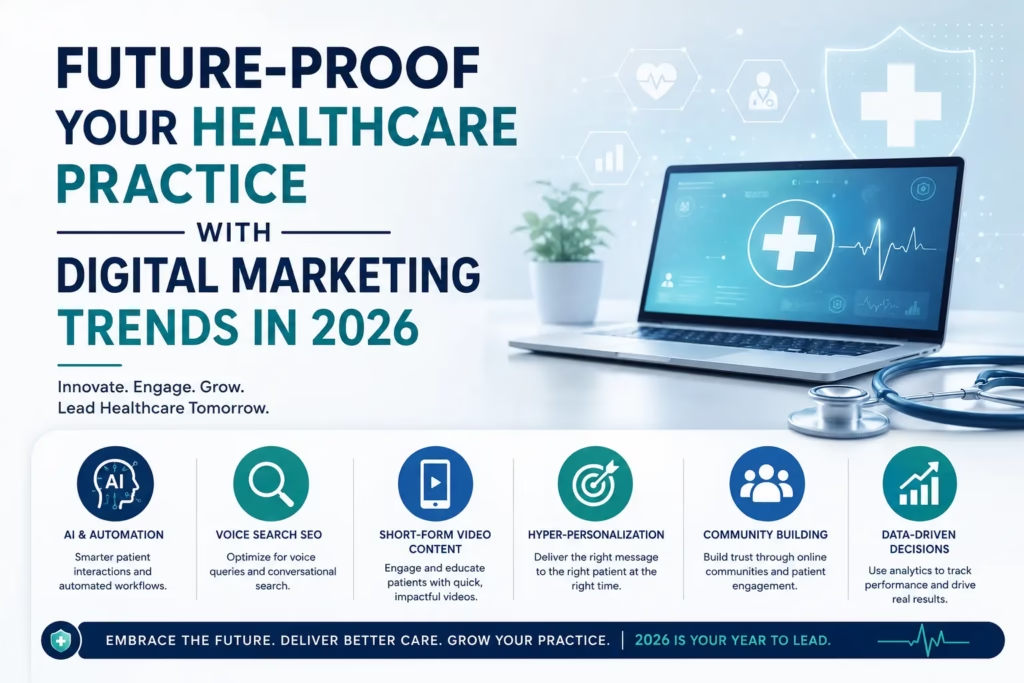
The healthcare industry continues to evolve, and staying updated with the latest digital marketing trends can help clinics and hospitals remain competitive. As patient expectations change and technology advances, healthcare providers must adapt their marketing strategies to deliver better experiences and maintain strong online visibility.
Artificial intelligence (AI) is transforming patient communication through chatbots, personalized email campaigns, predictive analytics, and automated appointment reminders. Voice search is also becoming more common, making conversational SEO and location-based optimization increasingly important.
Short-form video content, interactive health education, telemedicine promotion, and personalized patient experiences are expected to play a larger role in healthcare marketing. Patients now expect quick access to reliable information, convenient online booking, and responsive digital communication across multiple channels.
Privacy and data security will remain top priorities. Healthcare organizations must ensure their digital marketing practices comply with applicable regulations while protecting patient information.
By embracing innovation, investing in modern technologies, and continuously refining your digital marketing strategy, your clinic or hospital can attract more patients, build lasting trust, and achieve sustainable growth well beyond 2026.
Case Study
A multi-specialty clinic was struggling to attract new patients despite offering quality healthcare services. The clinic had an outdated website, limited online visibility, very few patient reviews, and an inactive social media presence. Most new patients came through referrals, making growth slow and unpredictable.
To improve its online presence, the clinic implemented a comprehensive digital marketing strategy. The first step was redesigning the website to make it mobile-friendly, fast, and easy to navigate. Online appointment booking was added, and each medical department received a dedicated service page optimized for relevant healthcare keywords.
Next, the clinic optimized its Google Business Profile by updating business information, uploading professional photos, and encouraging satisfied patients to leave genuine reviews. Local SEO efforts focused on location-based keywords, helping the clinic rank higher for searches related to nearby healthcare services.
The clinic also launched a content marketing strategy by publishing weekly health blogs, preventive care articles, and educational videos. Social media platforms were used to share health tips, awareness campaigns, and doctor introductions, helping build trust with the local community. At the same time, targeted Google Ads campaigns promoted high-demand services such as health checkups and specialist consultations.
Within six months, the clinic experienced noticeable improvements. Organic website traffic increased significantly, appointment requests grew steadily, Google Business Profile interactions improved, and patient reviews strengthened the clinic’s online reputation. By combining SEO, content marketing, paid advertising, and reputation management, the clinic successfully attracted more patients while building long-term credibility.
This example demonstrates that a well-planned digital marketing strategy can help healthcare providers improve visibility, strengthen patient trust, and achieve sustainable business growth.
Conclusion
In 2026, digital marketing is no longer optional for clinics and hospitals—it’s a vital part of delivering accessible, patient-centered healthcare. Today’s patients rely on search engines, online reviews, websites, and social media to find trusted healthcare providers, making a strong digital presence essential for attracting and retaining patients.
By investing in a professional website, Local SEO, Google Business Profile optimization, valuable healthcare content, social media marketing, paid advertising, and online reputation management, healthcare providers can increase visibility, build lasting trust, and generate more appointment bookings. Tracking performance metrics and staying updated with emerging trends such as AI, voice search, and marketing automation will further strengthen long-term success.
The healthcare organizations that embrace digital marketing today will be better positioned to serve their communities, enhance patient experiences, and achieve sustainable growth in an increasingly competitive digital landscape. A thoughtful, patient-focused marketing strategy doesn’t just grow your practice—it helps connect more people with the quality healthcare they need.
Frequently Asked Questions (FAQs)
1. Why is digital marketing important for clinics and hospitals?
Digital marketing helps clinics reach more patients online, build trust, and increase appointment bookings. It also improves visibility on search engines and strengthens your healthcare brand.
2. What is the best digital marketing strategy for healthcare providers?
A combination of SEO, Local SEO, Google Business Profile optimization, content marketing, and social media delivers the best results. Using multiple channels helps attract and retain more patients.
3. How does Local SEO help clinics attract nearby patients?
Local SEO helps your clinic appear in location-based searches like “doctor near me” or “hospital nearby.” This increases your visibility among patients who are actively looking for healthcare services.
4. Why is Google Business Profile important for healthcare marketing?
A Google Business Profile improves your clinic’s visibility in Google Search and Maps. It also allows patients to find your contact details, reviews, business hours, and appointment links easily.
5. What type of content should clinics and hospitals publish?
Publish educational blogs, health tips, treatment guides, FAQs, and awareness campaigns to help patients make informed decisions. Quality content also boosts SEO and builds trust.
6. Can Google Ads increase patient appointments?
Yes, Google Ads target people actively searching for healthcare services, making them highly effective for generating qualified leads. Well-optimized campaigns can quickly increase appointments and website traffic.
7. Why are online reviews important in digital marketing?
Positive online reviews build patient trust and improve your local search rankings. Responding professionally to reviews also strengthens your clinic’s online reputation.
8. How long does digital marketing take to show results?
Paid advertising can generate results within days, while SEO and content marketing usually take 3–6 months to show significant improvements. Consistent efforts lead to sustainable long-term growth.
9. Which metrics should healthcare providers track?
Track website traffic, appointment bookings, conversion rates, search rankings, and ROI to measure success. These metrics help optimize your digital marketing strategy over time.
10. Should clinics hire a digital marketing agency?
A professional digital marketing agency can manage SEO, paid ads, content, and social media while you focus on patient care. Their expertise helps improve online visibility and accelerate practice growth.
Author Bio
StubbSpire Editorial Team is a group of digital marketing professionals specializing in SEO, content marketing, social media, PPC, and web strategy. The team creates practical, data-driven content to help businesses—including clinics, hospitals, startups, and local companies—improve their online visibility, attract qualified leads, and achieve sustainable growth through effective digital marketing.