Social Media Marketing has become one of the most effective ways for businesses to connect with potential customers, strengthen brand awareness, and generate qualified leads. Whether you’re a startup founder, a local business owner, or an established company, maintaining an active presence on social media platforms is no longer optional—it’s an essential part of modern business growth. However, despite investing time, resources, and advertising budgets, many businesses still struggle to achieve meaningful results from their social media efforts.
At first glance, social media marketing appears simple. Create a few posts, upload videos, engage with followers, and wait for inquiries to come in. In reality, today’s social media landscape is far more competitive and complex than it was a few years ago. Algorithms constantly change, audience preferences evolve, and users have become increasingly selective about the content they consume and interact with. A strategy that worked in 2023 or 2024 may not deliver the same results in 2026.
One of the biggest misconceptions among business owners is believing that merely posting content regularly guarantees growth. Unfortunately, consistency alone isn’t enough. Without a well-defined strategy, audience research, compelling content, and performance analysis, even the most visually appealing posts can fail to generate engagement, website traffic, or conversions. Many businesses focus heavily on selling products and services while overlooking what social media users truly want—valuable information, authentic interactions, and solutions to their problems.
Google’s recent updates and its continued emphasis on Experience, Expertise, Authoritativeness, and Trustworthiness (E-E-A-T) have further reinforced the importance of creating content that genuinely helps users. The same principle applies to social media. Brands that share industry knowledge, answer common questions, showcase real experiences, and build meaningful relationships with their audience are more likely to earn trust and long-term loyalty. On the other hand, businesses that rely solely on promotional content often find themselves struggling with declining reach, low engagement rates, and missed opportunities.
we’ve worked with businesses across various industries and observed a common pattern: social media itself isn’t the problem. The challenge lies in how businesses approach it. From the absence of a content strategy to unrealistic expectations and inconsistent execution, several factors contribute to social media marketing failure.
In this guide, we’ll explore the most common reasons why businesses fail at social media marketing, discuss the mistakes that limit their online growth, and share practical strategies that can help founders, entrepreneurs, and marketing teams build a stronger digital presence, attract the right audience, and turn social media into a sustainable channel for business growth
The Reality of Social Media Marketing in 2026
Social media marketing in 2026 is vastly different from what it was just a few years ago. Businesses can no longer rely on posting occasional promotional graphics, using trending hashtags, or expecting organic reach to generate leads automatically. The social media ecosystem has become increasingly competitive, user-centric, and driven by platform algorithms that prioritize quality, relevance, and engagement.
Today, consumers spend a significant amount of their daily screen time scrolling through social media feeds, watching short-form videos, reading reviews, and researching brands before making purchasing decisions. Whether someone is looking for a local service provider, comparing software solutions, or searching for product recommendations, social media often serves as the first touchpoint in their customer journey.
However, gaining visibility on social platforms has become more challenging than ever.
Every minute, thousands of businesses publish content on Instagram, LinkedIn, Facebook, YouTube, and other emerging platforms. Users are exposed to an overwhelming amount of information, making their attention spans shorter and their expectations much higher. If your content fails to capture interest within the first few seconds, users simply continue scrolling.
Algorithms Are Smarter Than Ever
Modern social media algorithms are designed to deliver personalized experiences to users. Instead of displaying posts chronologically, platforms analyze numerous signals to determine which content deserves wider distribution.
Some of these ranking factors include:
- Watch time on videos
- Shares and saves
- Meaningful comments
- Click-through rates
- Content relevance
- Posting consistency
- User interactions with previous posts
- Profile engagement history
For example, a short educational video explaining a common industry problem is more likely to reach a larger audience than a generic promotional image that says, “Buy our services today.”
This shift means businesses must move beyond traditional advertising tactics and focus on creating content that informs, educates, entertains, or solves real problems.
Organic Reach Continues to Decline
One of the biggest frustrations among business owners is declining organic reach.
Several years ago, companies could build substantial audiences by simply posting regularly. Today, even accounts with thousands of followers may struggle to reach more than a small percentage of their audience organically.
This doesn’t mean social media marketing is ineffective. Instead, it highlights the importance of developing a strategic approach that combines high-quality content, community engagement, and targeted advertising.
Businesses that expect immediate visibility without investing in content quality or audience engagement often become discouraged and abandon their social media efforts too soon.
Audiences Are Looking for Authenticity
Consumers in 2026 have become more skeptical of overly polished advertisements and aggressive sales messages.
People prefer brands that appear genuine, transparent, and relatable.
They want to know:
- Who is behind the business?
- What experience does the company have?
- How has the business helped previous clients?
- What makes the brand different from competitors?
This is why behind-the-scenes videos, team introductions, customer testimonials, case studies, and educational content tend to perform exceptionally well.
Businesses that consistently share real experiences and practical insights can establish stronger relationships with their audience and build long-term trust.
Short-Form Videos Dominate User Attention
Video content continues to be one of the most effective ways to increase engagement and brand awareness.
Features such as:
- Instagram Reels
- YouTube Shorts
- Facebook Reels
- LinkedIn Video Posts
have transformed how users consume information.
Short-form videos allow businesses to answer questions, showcase expertise, demonstrate products, and tell compelling stories within seconds.
For example, a digital marketing agency can create quick videos discussing topics like:
“Three reasons your Facebook ads aren’t converting.”
“Common SEO mistakes small businesses make.”
“How often should you post on Instagram in 2026?”
Content like this not only attracts potential customers but also positions businesses as knowledgeable industry experts.
Google’s E-E-A-T Principles Matter Beyond Websites
Google’s emphasis on Experience, Expertise, Authoritativeness, and Trustworthiness (E-E-A-T) is influencing how businesses communicate across all digital channels, including social media.
Although E-E-A-T is not a direct social media ranking factor, its principles align closely with what users expect from brands online.
Businesses that demonstrate expertise through educational posts, share first-hand experiences, showcase successful projects, and provide accurate information are more likely to earn audience trust.
On the other hand, brands that repeatedly publish misleading claims, copied content, or low-value promotional posts may find it difficult to maintain credibility.
Social Media Is No Longer Just a Marketing Channel
Many companies still view social media as a place to advertise products and services.
In reality, social media has evolved into a platform for:
- Building brand authority
- Generating qualified leads
- Providing customer support
- Conducting market research
- Establishing professional networks
- Encouraging customer loyalty
- Managing online reputation
Customers often check a company’s social media presence before visiting its website, contacting its sales team, or making a purchase decision.
An inactive profile, outdated information, or poor engagement can negatively influence how potential customers perceive a business.
Businesses Need a Long-Term Mindset
Perhaps the most important reality of social media marketing in 2026 is understanding that sustainable growth does not happen overnight.
Building an engaged audience takes time, experimentation, and continuous optimization. Businesses that commit to sharing valuable content, responding to their community, analyzing performance data, and adapting to changing trends are far more likely to succeed than those seeking instant results.
Social media marketing is no longer about posting content simply to stay visible. It’s about creating meaningful experiences, earning trust, and becoming a reliable source of information for your target audience. Businesses that understand this shift will not only survive in the competitive digital landscape but will also establish a stronger online presence and unlock new opportunities for growth.diences tend to perform better than brands that only push products or services.
1. Businesses Start Without a Social Media Strategy
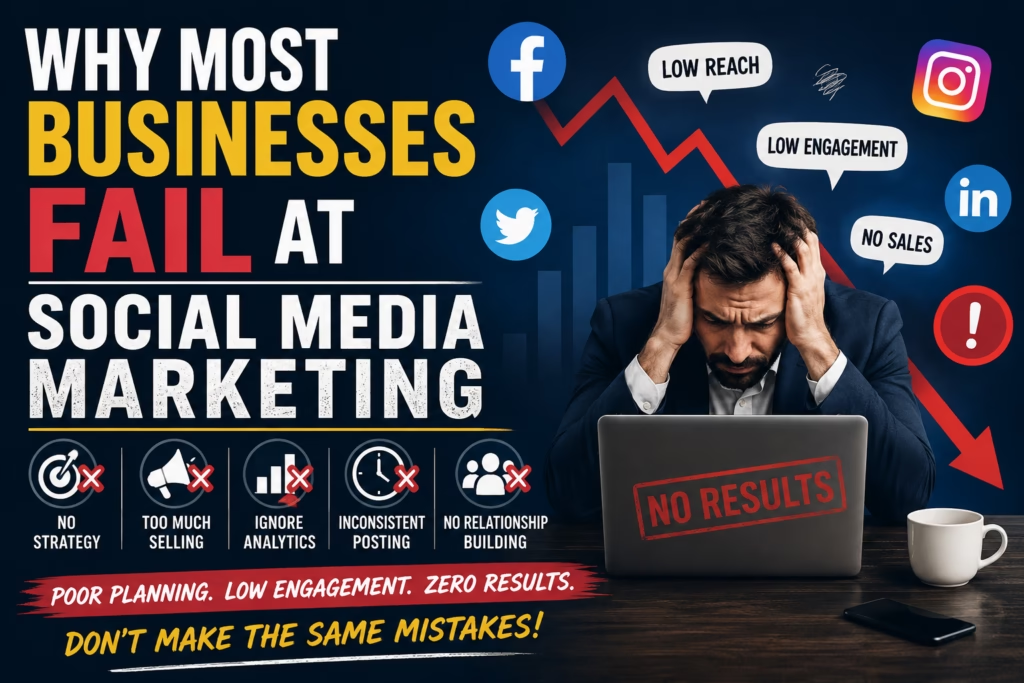
One of the most common reasons businesses struggle with Social Media Marketing is the lack of a clear strategy. Many companies know they need to be active on social platforms, but they often jump into posting content without defining their goals, understanding their audience, or planning how social media will contribute to business growth.
It’s easy to assume that posting regularly is enough to build a strong online presence. Business owners create accounts on Instagram, Facebook, LinkedIn, or YouTube, share promotional graphics, celebrate holidays, and occasionally post updates about their products or services. However, after a few months, they realize that engagement remains low, followers are not increasing, and social media is not generating leads or sales.
The reality is that Social Media Marketing is much more than simply uploading content. It requires a well-planned strategy that aligns with business objectives and audience expectations.
Why Businesses Skip Strategy Development
For many small and medium-sized businesses, time and resources are limited. Owners often focus on operations, customer service, and sales, leaving social media as a secondary task. In some cases, social media responsibilities are assigned to employees who may not have experience in digital marketing.
As a result, businesses start posting randomly without asking important questions such as:
- What do we want to achieve through social media?
- Who is our target audience?
- Which platforms should we focus on?
- What type of content will attract potential customers?
- How will we measure success?
Without answers to these questions, businesses end up creating content without direction, making it difficult to achieve meaningful results.
Setting Clear Goals Matters
Every successful social media strategy starts with a specific goal. Some businesses want to increase brand awareness, while others focus on generating leads, driving website traffic, or building stronger relationships with existing customers.
For example, a startup launching a new product may prioritize reaching new audiences through educational videos and awareness campaigns. On the other hand, a service-based company may focus on sharing testimonials, case studies, and industry insights to build credibility and encourage inquiries.
Having clear objectives helps businesses create content that serves a purpose rather than posting simply to stay active.
Understanding Your Audience Is Essential
Another major mistake businesses make is creating content without understanding who they are trying to reach. Even high-quality content can fail if it doesn’t address the needs and interests of the right audience.
Businesses should identify:
- Their ideal customers
- Common challenges those customers face
- The platforms they use most often
- The type of content they prefer consuming
For instance, professional audiences are generally more active on LinkedIn, while visually driven industries such as fashion, food, and travel often perform better on Instagram.
Strategy Turns Efforts into Results
Businesses that succeed with Social Media Marketing don’t post content randomly. They develop a content plan, track important metrics, and continuously refine their approach based on performance data.
A well-defined strategy provides direction, saves time, and ensures that every post contributes toward a larger business goal. Instead of wondering why social media isn’t working, businesses with a strategy can confidently measure progress, identify opportunities, and build a stronger online presence over time.
2. Lack of a Clear Social Media Strategy
One of the primary reasons businesses fail at Social Media Marketing is the absence of a clear strategy. Many companies create social media accounts and start posting content without defining their goals, understanding their target audience, or deciding how social media will support their overall business objectives.
Without a strategy, businesses often share random promotional posts, inconsistent messages, and content that doesn’t resonate with their audience. As a result, engagement remains low, follower growth slows down, and social media efforts fail to generate meaningful leads or sales.
An effective social media strategy should answer key questions such as: Who is your target audience? Which platforms should you focus on? What type of content will provide value to your audience? And how will you measure success? Having clear goals and a well-planned content roadmap helps businesses create purposeful campaigns, improve audience engagement, and achieve long-term growth through social media marketing.
3. Trying to Sell Instead of Building Relationships
Another common mistake businesses make in Social Media Marketing is focusing too much on selling rather than building meaningful relationships with their audience. Many brands use their social media profiles as digital billboards, constantly promoting products, services, discounts, and special offers. While promotional content has its place, excessive selling can quickly drive potential customers away.
People use social media to learn, discover new ideas, and engage with brands they trust. They are more likely to follow businesses that provide valuable insights, answer common questions, share industry expertise, and showcase authentic experiences. Instead of posting only sales-driven messages, businesses should create content that educates, entertains, and inspires their audience.
A good approach is to follow the 80/20 rule—80% of your content should focus on providing value, while only 20% should promote your products or services. By prioritizing conversations, engagement, and trust-building, businesses can develop stronger connections with their audience and turn followers into loyal customers over time.
4. Businesses Don’t Understand Platform Differences
One of the biggest mistakes businesses make in Social Media Marketing is treating every social media platform the same. Many brands simply copy and paste the same content across Instagram, Facebook, LinkedIn, and YouTube, expecting similar results. However, each platform has a unique audience, content format, and user behavior.
For example, Instagram is highly visual and works best for Reels, Stories, and carousel posts, while LinkedIn is ideal for sharing professional insights, industry updates, and thought leadership content. Facebook performs well for community engagement, local businesses, and customer interactions, whereas YouTube is better suited for tutorials, product demonstrations, and long-form educational videos.
Understanding these differences helps businesses create platform-specific content that resonates with their audience. Instead of adopting a one-size-fits-all approach, companies should tailor their messaging, visuals, and content formats to match the expectations of users on each platform. This not only improves engagement but also increases the effectiveness of their social media marketing efforts..
5. Inconsistent Posting Damages Growth
Consistency is one of the most important factors for success in Social Media Marketing, yet many businesses struggle to maintain a regular posting schedule. They often start with enthusiasm, sharing content daily for a few weeks, but gradually become inactive due to a lack of planning, time, or resources.
Irregular posting can negatively impact both audience engagement and platform algorithms. When businesses disappear for weeks or months, followers may lose interest, and social media platforms are less likely to recommend their content to new users. As a result, reach declines, engagement drops, and growth becomes much slower.
Creating a content calendar and scheduling posts in advance can help businesses stay consistent. Whether it’s posting three times a week or once a day, maintaining a steady presence keeps the brand visible, builds trust with the audience, and supports long-term growth through social media marketing.
6. Businesses Ignore Analytics
Many businesses invest time and money in Social Media Marketing but fail to track their performance. They continue posting content without analyzing what works and what doesn’t, making it difficult to improve their strategy or achieve better results.
Analytics provide valuable insights into audience behavior, content performance, and campaign effectiveness. Metrics such as reach, engagement rate, website clicks, follower growth, video watch time, and conversions can help businesses understand which types of content resonate most with their audience.
By regularly reviewing analytics, businesses can identify successful content, optimize underperforming campaigns, and make data-driven decisions. Instead of relying on guesswork, tracking key performance indicators allows companies to refine their social media marketing strategy, maximize their return on investment, and achieve sustainable growth.
7. They Expect Immediate Results`
One of the biggest misconceptions about Social Media Marketing is expecting instant success. Many businesses assume that creating a few posts, running advertisements, or gaining followers will immediately lead to inquiries and sales. When they don’t see quick results, they often become discouraged and abandon their efforts.
In reality, social media marketing is a long-term investment that requires consistency, patience, and continuous optimization. Building brand awareness, earning audience trust, and establishing a loyal community takes time. Most customers interact with a brand multiple times before making a purchase decision.
Businesses that focus on providing valuable content, engaging with their audience, and improving their strategy based on performance data are more likely to achieve sustainable growth. Instead of chasing overnight success, companies should view social media marketing as an ongoing process that delivers stronger results over time.
8. Businesses Fail to Build Trust
Trust plays a crucial role in Social Media Marketing, yet many businesses overlook its importance. Instead of building credibility, they focus solely on promoting their products or services, making it difficult for potential customers to feel confident about choosing their brand.
Today’s consumers prefer to engage with businesses that demonstrate expertise, transparency, and authenticity. They want to see real customer experiences, success stories, behind-the-scenes content, and proof that a company can deliver on its promises. Without these trust signals, even high-quality products or services may struggle to attract customers.
Businesses can strengthen trust by sharing client testimonials, case studies, team introductions, industry insights, and user-generated content. Responding promptly to comments and messages also shows that a brand values its audience and is committed to building meaningful relationships. In the long run, trust not only improves engagement but also helps convert followers into loyal customers.
9. Neglecting Paid Advertising Strategies
While organic growth is an essential part of Social Media Marketing, relying solely on unpaid content can limit a business’s reach and growth potential. As social media platforms continue to prioritize personalized content, organic visibility has declined, making it more challenging for businesses to reach new audiences consistently.
Many businesses avoid paid advertising because they view it as an unnecessary expense. However, when planned strategically, paid campaigns can help brands reach highly targeted audiences, generate qualified leads, increase website traffic, and boost conversions. Even a modest advertising budget can deliver significant results when combined with compelling content and precise audience targeting.
Platforms like Facebook, Instagram, and LinkedIn offer advanced targeting options based on demographics, interests, behaviors, and location. By investing in well-optimized advertising campaigns and regularly monitoring performance metrics, businesses can complement their organic efforts and maximize the impact of their social media marketing strategy.
How StubbSpire Helps Businesses Achieve Better Social Media Results
At StubbSpire Digital Marketing Agency, we understand that every business has unique goals.
Instead of using generic templates, we develop customized strategies based on audience behavior, market competition, and business objectives.
Our services include:
Social Media Strategy Development
Audience research
Competitor analysis
Content planning
Campaign creation
Content Creation
Custom graphics
Professional copywriting
Educational content
Short-form videos
Branded storytelling
Paid Advertising
Facebook Ads
Instagram Ads
Lead generation campaigns
Remarketing campaigns
Performance optimization
Monthly Reporting
Traffic analysis
Engagement reports
Campaign insights
Growth recommendations
Continuous improvements
Final Thoughts
Social media marketing remains one of the most effective ways to increase online visibility, build relationships, and generate business opportunities.
However, success requires much more than posting attractive graphics.
Businesses need a clear strategy.
They need consistency.
They need useful content.
Most importantly, they need to understand that social media is about building trust before asking customers to buy.
Brands that focus on helping people, answering questions, and sharing genuine expertise are more likely to succeed in today’s competitive digital landscape.
If your business has been struggling to grow on social media, now may be the right time to rethink your approach.
At StubbSpire Digital Marketing Agency, we help businesses create meaningful social media strategies that attract the right audience, strengthen brand credibility, and support long-term growth.
Frequently Asked Questions (FAQs)
1. Why do businesses fail at social media marketing?
Most businesses fail due to a lack of strategy, inconsistent posting, and focusing too much on sales.
2. How long does social media marketing take to show results?
It usually takes 3–6 months of consistent efforts to see meaningful results.
3. Which social media platform is best for businesses?
It depends on your audience, industry, and marketing goals.
4. How often should businesses post on social media?
Posting 3–5 times a week consistently is recommended.
5. Is paid advertising necessary for social media growth?
No, but it can help businesses reach more people and generate leads faster.
6. What content performs best on social media?
Videos, educational posts, testimonials, and behind-the-scenes content often perform well.
7. Why is engagement important in social media marketing?
Engagement helps build trust, improve visibility, and strengthen customer relationships.
8. How can businesses measure social media success?
By tracking reach, engagement, website clicks, leads, and conversions.
9. Can small businesses benefit from social media marketing?
Yes, social media is a cost-effective way for small businesses to attract customers and build brand awareness.
10. How can StubbSpire help with social media marketing?
StubbSpire offers strategy development, content creation, advertising, and performance optimization services.
Author Bio
About the Author
The StubbSpire Editorial Team is made up of experienced digital marketers, SEO specialists, and content strategists dedicated to helping businesses strengthen their online presence and achieve sustainable growth through data-driven marketing solutions.