Website not converting? You’re not alone. Many business owners invest heavily in building a modern website, improving SEO, and driving traffic through Google Ads, social media, or email marketing with one clear goal: Generating Sales or Leads. However, despite these efforts, they often face the same frustrating question:
“Why are visitors coming to my website but not buying anything or contacting me?”
A website that attracts traffic but fails to convert can become a major obstacle to business growth. In fact, one of the most common digital marketing challenges today is a low website conversion rate. Visitors may browse your pages, read your content, and explore your services—but if they leave without taking action, your website isn’t helping you achieve your goal of Generating Sales or Leads.
The truth is that a website not converting is rarely caused by a single issue. Slow page speed, confusing navigation, weak calls-to-action, poor mobile experience, lack of trust signals, or attracting the wrong audience can all affect your ability to convert visitors into customers. Sometimes, even a beautifully designed website fails because it doesn’t address what visitors are looking for or guide them toward the next step.
At StubbSpire Digital Marketing Agency, we’ve worked with businesses facing these exact challenges. Through website audits, SEO optimization, content improvements, and conversion-focused strategies, we’ve helped companies understand why visitors don’t buy and transform underperforming websites into powerful assets for Generating Sales or Leads.
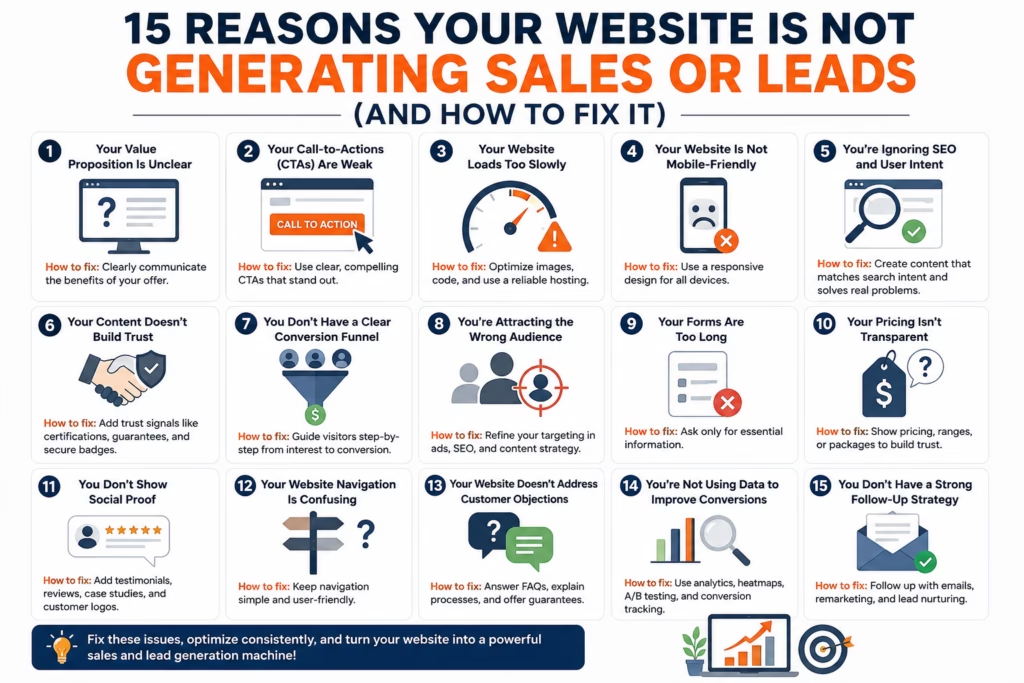
In this guide, we’ll explore 15 real reasons why your website is not converting, explain the causes behind a low website conversion rate, and share practical solutions you can implement to improve your online presence and start Generating Sales or Leads more effectively. Whether you’re a startup founder, small business owner, or growing brand, these insights will help you turn more visitors into loyal customers.
1. Your Website Doesn’t Clearly Explain What You Do
One of the most common reasons for a website not converting is that visitors simply don’t understand what your business does. When someone lands on your website, they should be able to answer three questions within a few seconds: What do you offer? Who do you help? And why should they choose you? If these answers aren’t clear, visitors are likely to leave without taking any action.
Many businesses make the mistake of using vague or overly creative headlines such as “Innovative Solutions for Modern Businesses” or “Empowering Growth Through Technology.” While these phrases sound professional, they don’t explain the actual service or the value customers will receive. This confusion is a major factor behind a low website conversion rate and one of the biggest reasons why visitors don’t buy.
Instead, your website should use clear and customer-focused messaging. For example, a headline like “We Help Small Businesses Generate More Leads Through SEO, Google Ads, and Website Optimization” instantly tells visitors what you do and the results they can expect. Pair this with a short description, trust signals such as testimonials or case studies, and a strong call-to-action like “Book a Free Consultation” or “Get a Custom Quote.”
Clear messaging not only improves user experience but also builds trust and increases conversions. At StubbSpire Digital Marketing Agency, we’ve helped businesses improve their online presence by creating websites that communicate value clearly and align with Google’s latest E-E-A-T guidelines. Sometimes, fixing a website not converting isn’t about redesigning the entire site—it’s simply about making sure visitors instantly understand how your business can solve their problems.
2. Your Website Loads Too Slowly
Website speed plays a major role in user experience and conversions. If your website takes more than a few seconds to load, many visitors will leave before they even explore your products or services. This is one of the most common reasons for a website not converting Generating Sales or Leads and a major factor behind a low website conversion rate.
A slow website not only frustrates users but also increases bounce rates and can negatively impact your search engine rankings. Even if your content and offers are great, visitors may never see them if your pages load slowly.
How to Fix It
You can improve website speed by:
- Compressing large images
- Choosing fast and reliable hosting
- Enabling browser caching
- Minifying CSS and JavaScript files
- Removing unnecessary plugins and scripts
Improving website speed is often one of the quickest and most effective ways to increase conversions, enhance user experience, and reduce the reasons why visitors don’t buy.
3. Visitors Don’t Trust Your Business
Trust is one of the most important factors in converting visitors into customers. No matter how attractive your website looks or how good your products are, people won’t buy if they don’t trust your business. This is a major reason behind a website not Generating Sales or Leads and explains why visitors don’t buy.
Common trust issues include the absence of customer testimonials, reviews, contact information, case studies, or details about your team and company. When visitors can’t find proof that your business is genuine and reliable, they start asking themselves, “Is this company real?” And once doubt appears, conversions often disappear.
How to Fix It
Build credibility by adding:
- Customer reviews and testimonials
- Success stories and case studies
- Client logos and partnerships
- Real team photos and company information
- Business certifications and awards
- A secure HTTPS connection
The more trust signals you provide, the more confident visitors feel about choosing your business. Building trust not only improves user confidence but also helps increase conversions and reduce the reasons why visitors don’t buy.y.
4. Your Call-to-Action Is Weak or Confusing
A strong Call-to-Action (CTA) tells visitors exactly what to do next. If your website doesn’t provide clear direction, visitors may become confused and leave without taking any action. This is one of the most common reasons for a website not converting and a major factor behind a low website conversion rate.
Imagine visiting a website and wondering: Should I call? Book a demo? Request a quote? Or buy now? Many websites overwhelm users with too many options or use vague CTA buttons like “Learn More” that don’t encourage action.
How to Fix It
Choose one primary CTA that aligns with your business goals, such as:
- Get a Free Consultation
- Book a Demo
- Start Your Free Trial
- Request a Quote
Make sure your CTA is:
- Clearly visible on the page
- Action-oriented and easy to understand
- Repeated strategically throughout the website
Simple and focused CTAs reduce confusion, guide visitors toward the next step, and often lead to higher conversions. If visitors know exactly what to do, they’re much more likely to become customers.
5. Your Website Isn’t Mobile-Friendly
Today, more than half of all website traffic comes from mobile devices, yet many businesses still design their websites primarily for desktop users. If your site isn’t optimized for smartphones and tablets, visitors may struggle with tiny text, difficult-to-tap buttons, broken layouts, or slow loading speeds. As a result, they leave without taking action, making this a common reason for a website not converting and contributing to a low website conversion rate.
How to Fix It
To create a better mobile experience, focus on:
- Responsive design that adapts to all screen sizes
- Fast mobile loading speeds
- Simple and easy navigation
- Readable fonts and properly spaced content
- Large, easy-to-click CTA buttons
A mobile-friendly website not only improves user experience but also boosts SEO rankings and increases conversions. When visitors can easily browse your website on any device, they’re more likely to stay, engage, and become customers.
6. Your Content Focuses on Features Instead of Benefits
Many businesses make the mistake of talking only about their features, tools, or technologies. However, visitors don’t care about features first—they care about the results your business can deliver. This is a common reason for a website not converting because customers want to know how your product or service will solve their problems and improve their lives.
For example, instead of saying “We use AI-powered analytics,” focus on the outcome: “We help businesses make smarter marketing decisions and increase ROI.” The second statement clearly explains the benefit and connects with what customers actually want.
How to Fix It
When creating website content, answer these questions:
- What problem do you solve?
- What results can customers expect?
- How will their life or business become easier?
By focusing on benefits rather than features, you make your message more customer-centric, build stronger connections, and increase the chances of turning visitors into customers.
7. Your Website Design Looks Outdated
Your website design plays a crucial role in building trust and creating a positive first impression. An outdated or poorly designed website can make visitors question your credibility and think, “This business may not be active or reliable.” Even if you offer excellent products or services, an old-fashioned design can become a major reason for a website not converting.
Visitors often judge your business based on elements such as your website’s layout, images, colors, typography, and overall professionalism. If these elements look outdated or inconsistent, users may leave before exploring what you offer.
How to Fix It
Refresh your website by focusing on:
- Modern and easy-to-read fonts
- High-quality images and visuals
- Proper use of white space
- Consistent branding across all pages
- Clean, organized layouts
A modern and professional website design builds credibility, improves user experience, and encourages visitors to stay longer—ultimately helping you increase conversions and grow your business.
8. You’re Attracting the Wrong Audience
Sometimes, the problem isn’t your website—it’s the people visiting it. If your visitors don’t match your ideal customer profile, they are unlikely to convert, no matter how good your website looks. This is a common reason for a website not converting and can lead to a low website conversion rate.
For example, if you offer premium services but your marketing attracts bargain hunters looking for the cheapest option, conversions will naturally suffer. The goal isn’t just to attract more traffic; it’s to attract the right traffic.
How to Fix It
Focus on improving:
- SEO targeting
- Paid advertising audiences
- Keyword strategy
- Content marketing
- Landing page messaging
By attracting visitors who are genuinely interested in your products or services, you’ll increase engagement, improve conversion rates, and reduce the reasons why visitors don’t buy. Quality traffic is always more valuable than quantity.
9. Your Forms Are Too Long
Long and complicated forms can discourage visitors from contacting your business. When you ask for too much information upfront—such as full name, company name, phone number, email, budget, industry, company size, and address—visitors may feel overwhelmed and abandon the form altogether. This creates friction and is a common reason for a website not converting.
People prefer quick and simple interactions, especially when they’re reaching out for the first time. The more effort required to fill out a form, the lower the chances of conversion.
How to Fix It
Ask only for the essential details, such as:
- Name
- Phone number
You can always collect additional information later during the sales process. By keeping your forms short and user-friendly, you make it easier for visitors to contact you, improve user experience, and increase the number of leads your website generates.
10. Your Pricing Isn’t Transparent
Pricing is one of the first things potential customers look for when considering a product or service. If your website hides pricing or provides little information, visitors may feel uncertain and start asking questions like: “Is this affordable?”, “Will I be pressured into buying?”, or “Are there hidden costs?” This uncertainty often causes people to leave your website before contacting you, making it a common reason for a website not converting.
How to Fix It
If possible, make your pricing more transparent by:
- Displaying pricing on your website
- Offering pricing ranges for different services
- Clearly explaining your packages and what’s included
- Adding FAQs to answer common pricing questions
Transparency builds trust, reduces hesitation, and helps visitors make informed decisions. When customers know what to expect, they’re more likely to engage with your business and move closer to becoming paying clients.ion.
11. You Don’t Show Social Proof
People trust other people more than they trust marketing messages. If visitors see real customers achieving success with your business, they’re much more likely to take action. Without social proof, skepticism grows, and visitors may hesitate to buy or contact you. This makes the lack of social proof a common reason for a website not converting.
How to Fix It
Strengthen your credibility by adding:
- Customer testimonials
- Google reviews
- Video testimonials
- Case studies
- User-generated content
Whenever possible, include:
- Real customer names
- Photos
- Specific results or success metrics
Social proof helps answer an important question every visitor has: “Has this worked for others like me?” When potential customers see evidence that others trust and benefit from your business, they feel more confident choosing you, leading to higher conversions and stronger customer trust.
12. Your Website Navigation Is Confusing
Visitors should be able to find the information they need quickly and easily. If your website has cluttered menus, hidden pages, or confusing navigation, users may become frustrated and leave without taking action. This is a common reason for a website not converting and can significantly affect your conversion rate.
Common navigation mistakes include having too many menu items, complex page structures, unclear labels, or important information buried deep within the site. When visitors struggle to find what they’re looking for, they are less likely to trust your business or continue exploring.
How to Fix It
Keep your website navigation simple and organized. Use clear categories such as:
- Home
- About
- Services
- Case Studies
- Blog
- Contact
A well-structured website creates a smooth user journey, improves the overall experience, and makes it easier for visitors to take action. The simpler the navigation, the more likely visitors are to stay engaged and convert into customers.
13. Your Website Doesn’t Address Customer Objections
Before making a purchase or contacting your business, visitors naturally have questions and concerns. They may wonder, “Is this worth the money?”, “Will this work for me?”, “How long will it take?”, or “What if I don’t see results?” If your website doesn’t address these objections, visitors may hesitate and leave without taking action, making this a common reason for a website not converting.
How to Fix It
Proactively answer customer concerns by adding:
- FAQs
- Guarantees or refund policies
- Case studies
- Customer testimonials
- Detailed service or product explanations
When you address doubts before visitors have to ask, you build trust and make the decision-making process easier. The more confident visitors feel about your business, the more likely they are to become customers.
14. You’re Not Using Data to Improve Conversions
Many businesses try to improve their website by guessing what’s wrong, but effective conversion optimization should always be based on data. Without proper analytics, you won’t know where visitors lose interest, which pages generate the most leads, or what changes actually improve performance. This can be a major reason for a website not converting.
Without tracking user behavior, it’s difficult to understand:
- Where users drop off
- Which pages convert the best
- Which CTAs perform well
How to Fix It
Use tools such as:
- Google Analytics
- Heatmaps
- Session recordings
- Conversion tracking
- A/B testing
Data helps you understand exactly why visitors don’t buy and reveals the changes that can improve your conversion rate. By making data-driven decisions, you can optimize your website more effectively and turn more visitors into customers..
15. You’re Ignoring SEO and User Intent
A website can attract thousands of visitors and still fail to convert. Why? Because visitors arrive expecting one thing and find something completely different. This mismatch between what users are searching for and what your website offers is a common reason for a website not converting and can lead to a low website conversion rate.
Modern SEO is no longer just about ranking higher on search engines. It’s about understanding search intent, creating helpful content, building trust, and providing an excellent user experience. This approach aligns with Google’s latest E-E-A-T guidelines, which emphasize Experience, Expertise, Authoritativeness, and Trustworthiness.
How to Fix It
Create content that:
- Solves real problems
- Answers user questions clearly
- Demonstrates your expertise
- Includes original insights and experiences
- Provides practical and actionable solutions
When your content genuinely helps users and matches their search intent, visitors are more likely to trust your business, engage with your website, and become customers. In the long run, focusing on SEO and user intent not only improves rankings but also drives meaningful conversions..
How StubbSpire Helps Businesses Increase Website Conversions
At StubbSpire Digital Marketing Agency, we believe a website should do more than look good.
It should:
- Generate qualified leads
- Build trust
- Rank on search engines
- Convert visitors into customers
- Support long-term business growth
Our team combines:
- SEO strategies based on Google’s latest updates
- Conversion-focused website optimization
- User experience improvements
- Content marketing
- Performance-driven digital campaigns
We work closely with businesses to identify what’s preventing conversions and create practical solutions that deliver measurable results.
Because sometimes, fixing a website not converting doesn’t require a complete redesign—it requires understanding your visitors better and giving them exactly what they need.
Final Thoughts
If your website is not converting, don’t assume your business or product is the problem.
In many cases, small improvements can create significant results.
Start by asking:
- Is my message clear?
- Do visitors trust my business?
- Is my website fast and mobile-friendly?
- Am I attracting the right audience?
- Am I answering customer questions?
Understanding why visitors don’t buy is the first step toward improving a low website conversion rate.
The businesses that consistently grow online aren’t always the ones with the most traffic.
They’re the ones that make it easy for visitors to trust them, understand their value, and take action.
And that’s where real digital growth begins.
Frequently Asked Questions (FAQs)
1. Why is my website getting traffic but not generating sales or leads?
Your website may be attracting the wrong audience, have unclear messaging, weak CTAs, slow loading speed, or lack trust signals. Identifying these issues can help improve conversions and start generating more sales or leads.
2. What is a good website conversion rate?
A good conversion rate varies by industry, but generally, a rate between 2% and 5% is considered average, while rates above 5% are considered strong. The key is to continuously optimize your website based on user behavior and data.
3. Why do visitors leave my website without taking action?
Visitors may leave because your website is slow, difficult to navigate, not mobile-friendly, or doesn’t clearly explain your products or services. A lack of trust and unclear calls-to-action can also discourage users from converting.
4. How can I improve a low website conversion rate?
You can improve conversions by optimizing website speed, simplifying navigation, creating clear CTAs, showing social proof, improving mobile usability, and producing content that aligns with user intent.
5. Does website design affect conversions?
Yes. A modern, professional, and easy-to-use website builds trust and keeps visitors engaged. An outdated design can make users question your credibility and leave your website.
6. Why is mobile optimization important for conversions?
Most users browse websites on mobile devices. If your website isn’t mobile-friendly, visitors may experience slow loading times, poor layouts, or difficult navigation, which can lead to lost conversions.
7. How do testimonials and reviews help increase conversions?
Customer testimonials, reviews, and case studies provide social proof. They show potential customers that others have had positive experiences with your business, increasing trust and encouraging them to take action.
8. What role does SEO play in website conversions?
SEO helps attract visitors who are actively searching for your products or services. When combined with helpful content and a good user experience, SEO can significantly increase conversions and generate qualified leads.
9. How can I find out why visitors aren’t converting?
Use tools like Google Analytics, heatmaps, session recordings, and A/B testing to understand user behavior. These insights help you identify where visitors drop off and what changes can improve your conversion rate.
10. Can a website redesign improve conversions?
Yes, but only if it’s focused on user experience and conversion optimization. Improving website speed, messaging, navigation, trust signals, and mobile responsiveness often has a greater impact than simply changing the design.
Author Bio
About the Author
StubbSpire Digital Marketing Agency is a results-driven digital marketing agency specializing in SEO, content marketing, website optimization, and paid advertising. With years of experience helping businesses improve their online presence, our team creates data-driven strategies that increase visibility, boost conversions, and drive sustainable growth. We are passionate about sharing practical insights and actionable solutions that help business owners solve real digital marketing challenges and generate more sales and leads online.
Expertise: SEO • Content Marketing • Website Optimization • Google Ads • Lead Generation • Conversion Rate Optimization (CRO)