
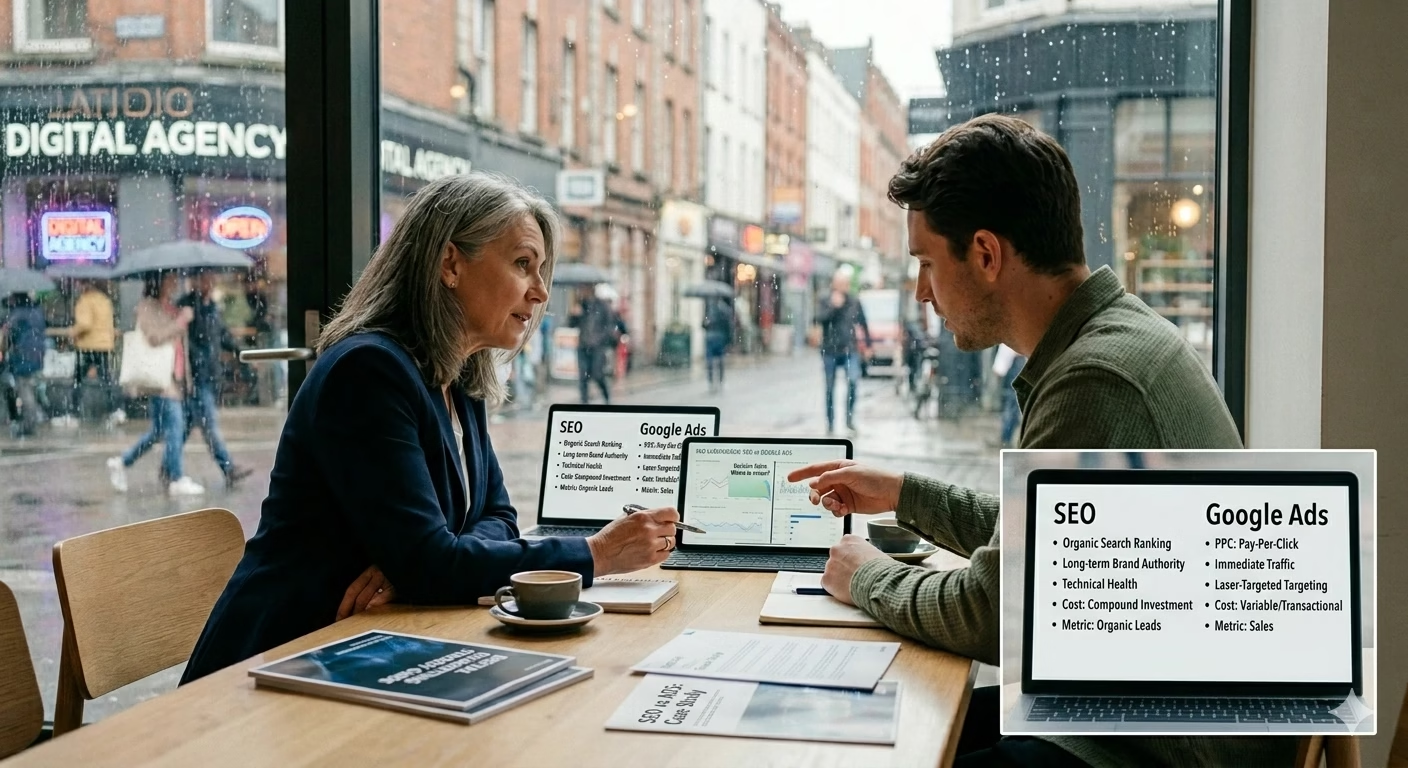
In the high-stakes world of digital marketing, business owners constantly face the classic dilemma of SEO vs Google Ads when deciding how to scale. Whether you are a lean startup searching for your first set of customers or an established brand looking to dominate a new market, you will eventually face the high-stakes question of SEO vs. Google Ads. This choice often feels like deciding between building a foundation that lasts for generations or fueling a fire for an immediate, intense burst of light. While both paths are designed to drive traffic, they operate with vastly different timelines, financial structures, and ROI profiles that can fundamentally shape your business’s future.
Understanding the tension between SEO vs. Google Ads is critical. One offers the compounding interest of long-term brand authority, while the other provides the immediate adrenaline shot of targeted visibility. But in 2026, which one is the “better” investment for your specific goals?
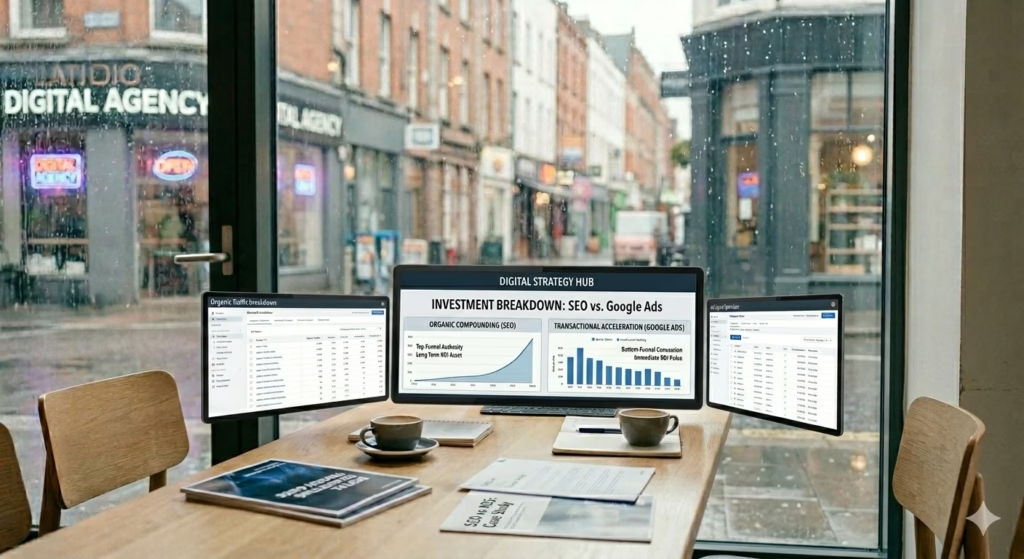
The Core Difference: Speed vs. Sustainability
To decide where to allocate your budget, you must first define your timeline.
- Google Ads (The Adrenaline Shot): These are transactional. When you bid on competitive keywords, your business appears at the top of the search results almost instantly. It is the gold standard for lead generation when you have a time-sensitive offer or a new product launch.
- SEO (The Compounding Asset): This is an asset-building strategy. It requires a significant upfront investment in content, technical health, and local authority, but the return—organic, “free” traffic—can last for years.
When Should You Prioritize Google Ads?
If your business needs traction today, paid search is your best friend. It allows for “laser-sharp” targeting by location, intent, and even the time of day. For businesses looking for a digital marketing agency in the USA to manage a quick-win campaign, PPC provides the data-rich environment necessary to test landing pages and conversion rates immediately.
Choose Google Ads if:
- You are launching a new brand and need immediate market entry.
- You have a limited-time offer or seasonal promotion.
- You need to validate demand for a new service before committing to long-term SEO.
The Long Game: Why SEO is Your Compounding Asset
While ads stop the moment your budget runs out, a well-optimized website continues to work for you 24/7. Achieving high rankings—for terms like SEO services for small business USA or a reputable SEO company in London—doesn’t happen overnight. However, once you rank, the cost-per-acquisition (CPA) often drops significantly compared to paid clicks.
In 2026, SEO is no longer just about blue links; it’s about becoming a trusted authority that AI-powered search engines cite as a source. Whether you are seeking a website designing company in Canada or professional SEO services Canada, remember that a site optimized for human experience and technical authority will always outperform a site relying solely on paid traffic.
The Economics of Customer Lifetime Value (CLV)
When evaluating SEO vs. Google Ads, one must look beyond immediate conversion costs and consider the Customer Lifetime Value (CLV). Google Ads can often feel expensive because the price per click is dictated by fierce competition. However, if your product has a high profit margin, the immediate sale might justify the cost.
Conversely, SEO excels at building brand equity. Because organic search users often view top-ranking sites as the most trustworthy industry leaders, they are frequently more loyal and easier to retain over the long term. By focusing on SEO, you aren’t just buying a lead; you are building a reputation that lowers the barrier to future sales, effectively reducing your overall marketing spend as your brand becomes a household name.
Navigating Competitive Crowding
The reality of 2026 is that digital space is becoming more “crowded.” In many industries, both the top of the search results and the AI-generated summaries are dominated by major players. This makes it increasingly difficult for smaller businesses to break through on pure volume alone.
This is where specialized, hyper-local SEO and niche-focused PPC campaigns become vital. Instead of fighting for broad, expensive keywords, savvy businesses are now using Google Ads to defend their brand name while using SEO to target long-tail, conversational queries that AI models are currently favoring. This defensive and offensive split ensures that no matter how the search results page shifts, your business remains visible, accessible, and authoritative.
The Winning Strategy: A Hybrid Approach
The most successful companies do not treat these as mutually exclusive. Instead, they use a “blended” model:
- Capture immediate demand: Use Google Ads to capture the low-hanging fruit while your team builds your organic presence.
- Use PPC data to refine your SEO: See which ad copy and keywords convert the best? Incorporate those high-intent terms into your long-form blog content.
- Shift budget over time: As your organic rankings for terms like digital marketing company Canada begin to improve, you can slowly dial back ad spend on those specific keywords, moving that budget to test new markets or services.
The Reality of 2026: AI and Analytics
Measuring ROI today requires more than just tracking clicks. The integration of advanced CRM data with Google Ads and Google Search Console has become essential.
SEO often acts as the “top-of-funnel” driver, introducing new users to your brand, while Google Ads frequently serves as the “bottom-of-funnel” closer. Without a unified view, you might mistakenly attribute all success to ads, failing to see that your SEO built the initial trust needed for the conversion.
Whether you are searching for the best social media marketing company USA or an agency to handle your social media marketing UK, the focus should always remain on the user. Search engines reward content that answers questions, solves problems, and provides a seamless digital experience.
Final Thoughts: Building Your Digital Future
The “better” ROI depends entirely on your current maturity level. If you are a young business, start with ads to fund your growth. If you are looking to dominate your niche for the next decade, prioritize SEO.
Stop asking if you should choose one over the other. The real question is: How can you use both to build a more resilient, profitable business?
Are you ready to align your marketing strategy with your 2026 business goals? Whether you need to boost your organic reach or jump-start your lead flow with targeted ads, finding the right partner is the first step toward sustainable growth.
Frequently Asked Questions
1. Is SEO or Google Ads better for immediate results?
Google Ads is the better choice for immediate results, as it places your business at the top of search results the moment your campaign goes live.
2. How much should I budget for SEO versus Google Ads?
A common starting point is to allocate 60% of your budget to Google Ads for immediate lead flow and 40% to SEO to build long-term assets, adjusting as your organic traffic grows.
3.Why is my cost-per-lead higher on Google Ads than through organic search?
Google Ads operates on an competitive, real-time auction model where you must pay for every single click you receive. In contrast, organic SEO traffic is “earned” through high-quality content and authority, which typically results in a much lower cost-per-acquisition once you achieve top rankings.
4. How long does it take for an SEO strategy to become profitable?
While results can vary based on your industry and competition, most businesses see meaningful organic traffic growth within 4 to 9 months of consistent effort. Once these rankings are established, the compounding nature of SEO makes it one of the most cost-effective long-term channels for growth.
5.How does AI-generated search (SGE) impact my current SEO strategy?
AI-powered search is shifting the focus toward content that provides clear, expert-level answers rather than just keyword stuffing. To remain relevant, your strategy must prioritize high-quality, unique insights and first-party data that AI models can identify as reliable and authoritative source material.