Grid slots have transformed the way we approach spinning reels, and if you have previously stared at a hexagonal or square-packed playfield unsure where the paylines went, you are not alone https://aviamastersgames.pl/. We intend to walk you through exactly how these games work, using the aviation‑themed Aviamasters as our concrete example. Instead of traditional left‑to‑right paylines, a grid slot rewards clusters of matching symbols that touch horizontally or vertically. That one shift changes everything: volatility behaviour, bonus trigger logic, and the rhythm of a session. By the end of this guide, you will grasp cascading wins, symbol drop mechanics, and the practical steps you need to take before placing your first bet on a grid‑based game.
Return to Player, Volatility, and What They Mean for Your Gaming Session
RTP, or RTP, is the theoretical percentage of all wagered money that a game returns over an huge number of spins, and for grid slots like Aviamasters you will usually see a figure around 96%. That does not mean you get back 96% of your playing budget every time; it is a extended statistical average. We always advise checking the particular RTP value in the game’s information panel, because providers sometimes release variants with somewhat different settings. What matters more for your brief experience is volatility, and Aviamasters sits solidly in the high‑volatility category. High volatility means wins are less frequent but tend to be bigger when they arrive, and the cascading multiplier mechanic amplifies this characteristic https://en.wikipedia.org/wiki/2021_World_Series_of_Poker because the real payouts are centered in those uncommon, extended chain reactions.
In real terms, high volatility combined with cluster pays creates a distinct bankroll rhythm. You will experience many spins where nothing connects, or where you get a one small cluster of five low‑value symbols that barely registers. Then, without much warning, a cascade sequence will trigger and run for five, eight, or even more drops, and suddenly a spin that seemed empty becomes a significant win. This can be exhilarating, but it also means you need to manage your balance carefully. We believe that setting a session limit and keeping to a bet size that allows at least 150 to 200 spins gives you a decent chance to ride through the dry spells and catch one of those multiplier‑fuelled chains. If you bet too high compared to your balance, a run of non‑winning spins can deplete your funds before the game’s potential shows itself.
Hit frequency, which is the proportion of spins that yield at least one winning cluster, is not always published, but in a 7×7 cluster‑pays game you can anticipate it to be relatively high versus a 20‑payline slot. Many spins will deliver a small cluster, so you will watch the grid light up frequently. However, the amount of those hits is often under your bet size, which is why the game can still seem volatile. The true indicator of a session is not how often you win, but how many spins create a cascade chain that lifts the total win above the stake. In Aviamasters, those moments are tied to the bonus features, which we will explore next, because the free spins round changes both the multiplier behaviour and the symbol removal rules in ways that dramatically shift the payout profile.
The Aviamasters Visual Style and Visual Design
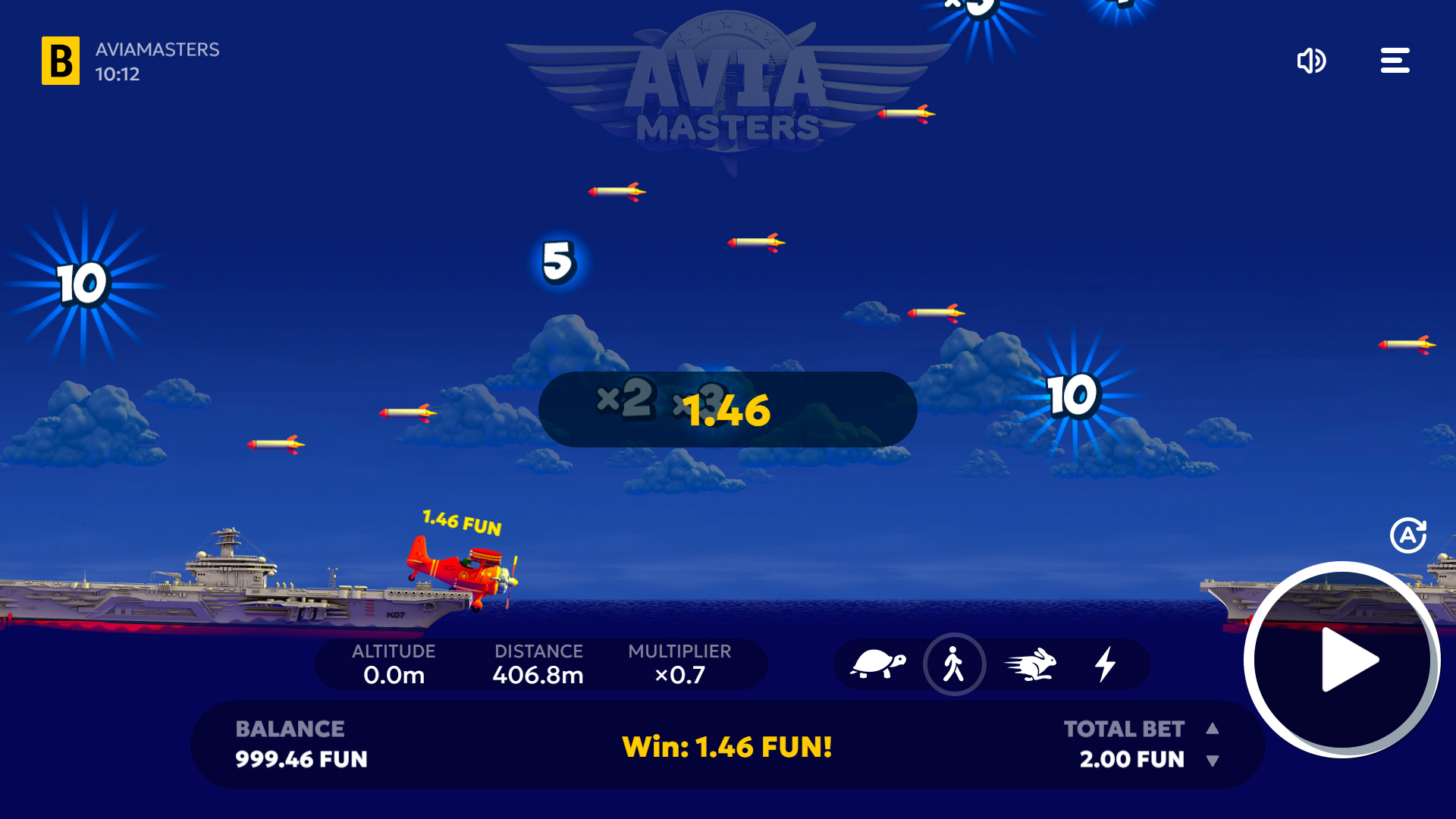
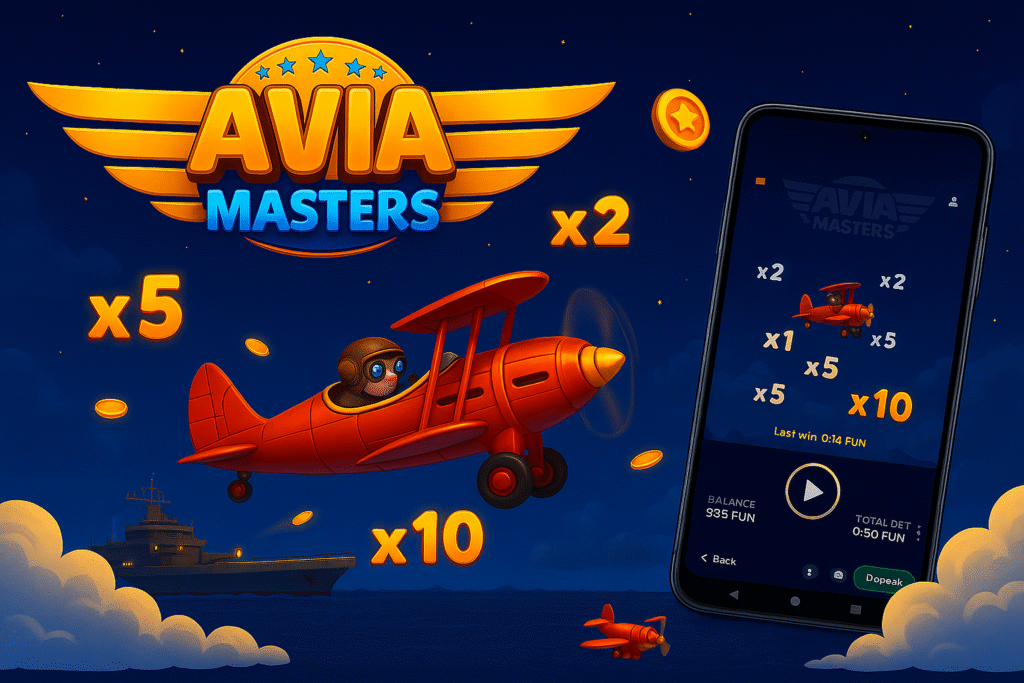
Aviamasters wraps its grid mechanics in a golden‑age‑of‑aviation setting that is immediately charming without appearing forced. The background sets you high above the clouds, with a vintage biplane sometimes flying past the playfield. Symbols are rendered in a warm, mildly nostalgic palette: leather flying helmets, brass propellers, aviator goggles, compasses, and a set of pilot characters that serve as the top‑tier icons. The lesser‑value symbols are stylised card‑rank emblems—hearts, spades, diamonds, and clubs—but they are marked with rivets and wing motifs so they feel like they fit on a hangar workshop wall rather than a casino floor. The general impression is cohesive and surprisingly calming, which works well for a game where you will devote time watching cascades unfold.
Sound design is more important than many players recognize, and here the developers have invested genuine effort into creating an audio environment that supports the theme without becoming repetitive. Each spin is accompanied by a soft engine rumble, and winning clusters produce a metallic clink that conjures tools touching a workbench. When a cascade chain surpasses three or four drops, the music builds with a triumphant brass section, offering you a clear audio cue that the multiplier is increasing. The scatter symbol—a stylised control tower—produces a radio crackle when it lands, and the free spins round transitions the soundtrack into a more urgent, percussive mode that signals the increased potential. These details are more than mere decoration; they help you track game states without continually watching the multiplier meter.
What we value most about the visual design is how it facilitates readability. On a 7×7 grid, you need to spot clusters quickly, and Aviamasters uses distinct silhouette shapes and colour contrasts so that premium symbols do not merge into the background or into each other. The pilot characters, for instance, have bold red or blue scarves that stand out against the muted tarmac greys of the low‑paying tiles. The game also marks winning clusters with a subtle glow and briefly displays the cluster size before the cascade triggers, offering you a split second to notice what just happened. This clarity is especially valuable when you are learning how cluster pays behave, because you can visually trace the connections without guesswork.
What Specifically Is a Grid Slot and Why It Is Important
Grid slots abandon the familiar reel‑and‑row architecture in favor of a single, continuous playfield where symbols drop into place like tiles. In Aviamasters, that field is a 7×7 square, meaning you have 49 positions that are filled with symbols on every spin. There are no paylines marked on the screen; instead, any group of five or more identical symbols adjacent to each other horizontally or vertically constitutes a winning cluster. This cluster‑pays system comes across as more organic than fixed paylines because wins can emerge anywhere, and the size of the cluster directly influences the payout. The bigger the connected group, the higher the reward, which encourages you to watch the whole grid rather than a single line.
The real mechanical shift, however, arises from what happens after a cluster is paid. In a traditional slot, winning symbols remain fixed and the rest spin again, but a grid slot eliminates winning clusters and allows new or existing symbols fall down to fill the gaps. This cascading feature, sometimes called tumbling or avalanche, means a single paid spin can trigger multiple consecutive wins without deducting an extra bet. In Aviamasters, each cascade also contributes to a progressive multiplier that increases with every successive win in the same spin sequence, so a modest initial cluster can snowball into a much larger payout if the grid continues to produce matches. That multiplier clears between paid spins, making each round a self‑contained chain reaction.
Understanding this core loop is what separates a casual tap‑and‑hope approach from a session where you actually know what to expect. Because the grid is cleared and refilled dynamically, the number of symbols in play and their distribution are constantly shifting. This affects hit frequency: you will see winning clusters more often than you might on a 20‑payline slot, but the individual cluster values are typically smaller until a cascade sequence really takes off. That rhythm—lots of little nibbles interrupted by occasional explosive chains—is the heartbeat of any grid slot, and Aviamasters plays into it with a theme that ensures every cascade feels like a formation of planes swooping into position.
How the Grid Works in Aviamasters: Clusters, Cascades, and Symbol Drops
Upon pressing spin in Aviamasters, 49 symbols drop onto the grid from above, occupying every cell. The game then checks the entire board for any group of five or more matching symbols that are neighboring horizontally or vertically. Diagonal touches do not count, so a cluster must be joined along the four cardinal directions. If multiple clusters of different symbols exist, all are settled simultaneously, and the payout for each cluster is based on the symbol type and the number of symbols in the group. A cluster of five low‑value card symbols offers a modest amount, while a cluster of fifteen pilot symbols provides a far more substantial reward. The paytable inside the game shows the exact multiplier for each symbol at various cluster sizes, so you can always review the numbers before you play.
Once all winning clusters are settled, those symbols vanish from the grid. The empty cells are then occupied by two mechanisms: existing symbols above the gaps fall straight down, and new symbols fall in from the top to fill any remaining spaces. This cascade happens automatically, and the game stops briefly so you can observe the new arrangement. Then the scan runs again. If new clusters of five or more show up, they are rewarded, the cascade multiplier increases by one step, and the removal‑and‑refill cycle continues. The sequence persists until no winning clusters remain on the grid, at which point the multiplier resets and you are set for the next paid spin. This means a single bet can theoretically generate dozens of individual wins, each one bumping the multiplier higher.
One subtlety that trips up newcomers is that the cascade multiplier applies to all wins within the same spin sequence, not just the triggering cluster. So if your first cascade produces a small cluster at 1x, the second cascade pays at 2x, the third at 3x, and so on. In Aviamasters, the multiplier can rise quite high during free spins because the starting multiplier is already raised, but even in the base game, a lucky chain of six or seven cascades can turn a modest initial cluster into a payout that matches a bonus round. The grid also has no predefined paylines, so the position of symbols is relevant only in terms of adjacency. This renders every spin feel open and unpredictable, because a winning cluster can form in a corner just as easily as in the centre.
Wager Range, Maximum Win, and Payout Potential
Aviamasters accommodates a diverse selection of betting approaches through a adaptable wager range that typically starts at a minimum of 0.20 currency units per spin and reaches 100 points or greater, depending on the operator. This span makes the game approachable if you are dipping your toes with low bets or you opt to aim for the larger reward brackets. The bet amount you pick proportionally changes the token value, so all cluster payouts displayed in the paytable are scaled correspondingly. We always recommend consulting the paytable before you begin, because it shows you the specific multiplier for each symbol at every cluster size, from 5 symbols up to the largest cluster of 49. Realizing that a complete grid cluster of the main pilot symbol rewards, say, 1,000 times your wager gives you a clear target to dream about, even though it is an exceedingly rare event.
The highest payout in Aviamasters is limited, as it is in most contemporary grid slots, and you can expect the cap to land somewhere between 5,000 and 10,000 times your total bet. This means that if you are wagering at the minimum stake, the largest possible payout is a game‑changing figure only in relative terms, but at higher stakes the absolute numbers become extremely significant. The cap is generally applied to a single spin sequence, including all cascades and the free spins round, so even if the multiplier and cluster values theoretically exceed the limit, the game will stop and award the maximum. We advise checking the game rules for the exact cap, as it differs by jurisdiction and operator configuration. Understanding the cap is essential because it affects the strategic value of buying the bonus, if that option is present.
Payout potential in Aviamasters is heavily concentrated in the free spins feature, where the persistent multiplier and the possibility of multiplier‑bearing symbols combine to create the kind of exponential curves that grid slot enthusiasts chase. In the base game, wins above 50x your bet are uncommon, and wins above 100x are rare. During free spins, however, a cascade chain that reaches a 15x or 20x multiplier, combined with a large cluster of premium symbols boosted by random multipliers, can easily exceed 500x and push toward the cap. This distribution means that your overall return is heavily dependent on how often you trigger the bonus and how well those bonus rounds perform. Some sessions will see multiple quick triggers and generous cascades; others will grind through long stretches of base game without a scatter in sight, which is exactly what high volatility promises.
Bonus Features That Fuel the Action
The scatter symbol in Aviamasters is the control tower, and hitting three or more of them in any position on the grid triggers the free spins round. The quantity of free spins given depends on how many scatters land: three scatters usually grant ten free spins, four give twelve, and five award fifteen. During the free spins round, the cascade multiplier does not reset between paid spins. Rather, it starts at a greater value—often 3x or 5x—and continues to grow with every cascade across the entire feature. This is a vital difference from the base game, because a multiplier that carries over across multiple spins can reach heights that are simply not attainable in standard play. If you succeed to extend the free spins with retriggers, the multiplier stays climbing, and the later spins can produce massive cluster payouts even from fairly small symbol groups.
Wild symbols show up as a vintage aviator’s wing badge, and they stand in for any regular paying symbol to help form or enlarge clusters. In Aviamasters, wilds do not possess a payout value of their own, but they can be the glue that links two smaller clusters into a single larger one, which drives the payout up the cluster‑size ladder. Wilds are also eliminated during cascades if they are part of a winning cluster, so they do not linger on the grid indefinitely. However, the game offers a special feature where certain high‑value symbols can carry a random multiplier. When a pilot symbol with a multiplier attached becomes part of a winning cluster, that multiplier affects the entire cluster payout, and if multiple multiplier symbols are present in the same cluster, their values are summed together before being applied. This can result in some truly staggering single‑cluster wins, especially during free spins when the cascade multiplier is already elevated.
Another feature worth understanding is the blast or propeller blast mechanic, which activates randomly after a non‑winning cascade. When the grid settles and no new clusters form, there is a possibility that a propeller icon will appear over a random symbol and destroy it along with a small radius of surrounding symbols. This clears space for new symbols to drop in, effectively giving the cascade sequence one more chance to produce a win. The blast does not guarantee a cluster, but it can rescue a spin that would otherwise end with a disappointing whimper. In the base game, this feature adds a welcome layer of unpredictability, and during free spins it becomes even more valuable because every extra cascade pushes the persistent multiplier higher. We have seen sessions where a single propeller blast extended a chain by two or three additional drops, turning a decent bonus round into a memorable one.
A Guide to Aviamasters: A Practical Walkthrough
Getting started with Aviamasters needs no special knowledge, but some deliberate steps can make your first session smoother. After the game loads, locate the menu button—usually a small gear or three‑line icon—and open the paytable. Devote a minute reviewing the cluster payout values for each symbol, and notice which symbols are the premium ones. Then examine the scatter and wild descriptions so you know exactly what to look for on the grid. Next, modify your bet size using the plus and minus buttons, remembering that you want enough spins to weather the dry spells. If the game offers an autoplay function, you can define a loss limit or a single‑win limit to avoid chasing losses, but we favor manual play for grid slots because watching the cascades and determining when to stop is part of the enjoyment.
When you activate spin, let the grid populate and look for clusters. You don’t have to count symbols manually; the game highlights winning groups and displays the total win for that cascade sequence in a running counter. Note the multiplier indicator, which usually sits to the side of the grid. In the base game, it returns to zero after each paid spin, so do not be alarmed when it returns to 1x. During free spins, you will notice it remain and climb, which is your signal that the round is building momentum. If you are uncertain whether a particular symbol combination should have paid, the game log or history tab can reveal you the exact breakdown of each cascade, including cluster sizes and multiplier steps. This transparency is invaluable when you are learning how cluster adjacency rules operate in edge cases, such as when two clusters of the same symbol are split by a single cell.
One useful habit we have developed is to pay close attention to the scatter counter. Because free spins are the principal route to the game’s biggest payouts, understanding how many scatters have landed on any given spin helps you regulate expectations. If you see two scatters land and the third just misses, you are one symbol away from a bonus trigger, which can be a good moment to keep playing rather than switching games. Conversely, if you have gone 150 spins without a scatter trio, it might be a good time to pause. There is no strategy that can affect where symbols land, but comprehending the statistical rhythms of a high‑volatility grid slot helps you make well-informed decisions about session length and bet sizing. Ultimately, Aviamasters benefits patience and a willingness to let the cascade multiplier do its work, so approach it as a marathon rather than a sprint.
Finally, consistently play within a structure that you define before the reels—or in this case, the grid—start moving. Settle on a loss limit and a win goal, and stick to both. The cascading mechanic can create an illusion of near‑misses that tempts you to keep playing, but the game’s maths do not alter based on previous outcomes. If you land a large win early, consider banking a portion of it and continuing with a smaller bet, or simply ending the session on a high note. Grid slots like Aviamasters are built to deliver memorable peaks and valleys, and the players who like them most are those who view the experience as entertainment with a built‑in cost, not as a guaranteed income stream. With the mechanics now obvious in your mind, you are well prepared to take to the skies and see how the clusters fall.