
The Real Estate Companies has undergone a dramatic transformation over the past decade. Gone are the days when buyers relied solely on newspaper advertisements, billboards, or local brokers to find their dream property. Today, the majority of homebuyers and property investors begin their search online, using search engines, social media platforms, real estate portals, and mobile apps to explore listings, compare prices, and research neighborhoods before ever contacting an agent.
This digital shift has created tremendous opportunities for real estate companies to connect with potential buyers and sellers. A well-optimized website, a strong social media presence, and effective digital marketing campaigns can help businesses reach thousands of interested prospects every month. However, simply having an online presence is no longer enough. As competition continues to grow, many real estate companies find it increasingly difficult to stand out and attract leads that are genuinely interested in purchasing or selling property.
One of the biggest challenges is the difference between generating traffic and generating quality leads. A website may receive hundreds or even thousands of visitors, but if those visitors are not actively looking to buy, invest, or sell, they are unlikely to convert into customers. This often results in wasted marketing budgets, low conversion rates, and frustration for sales teams who spend valuable time following up with unqualified prospects.
Several factors contribute to this problem. Poor search engine optimization (SEO), outdated websites, weak local visibility, ineffective advertising campaigns, lack of engaging content, and insufficient lead nurturing can all prevent real estate companies from reaching the right audience. In many cases, businesses focus heavily on promoting property listings while overlooking the importance of building trust, educating buyers, and providing a seamless online experience.
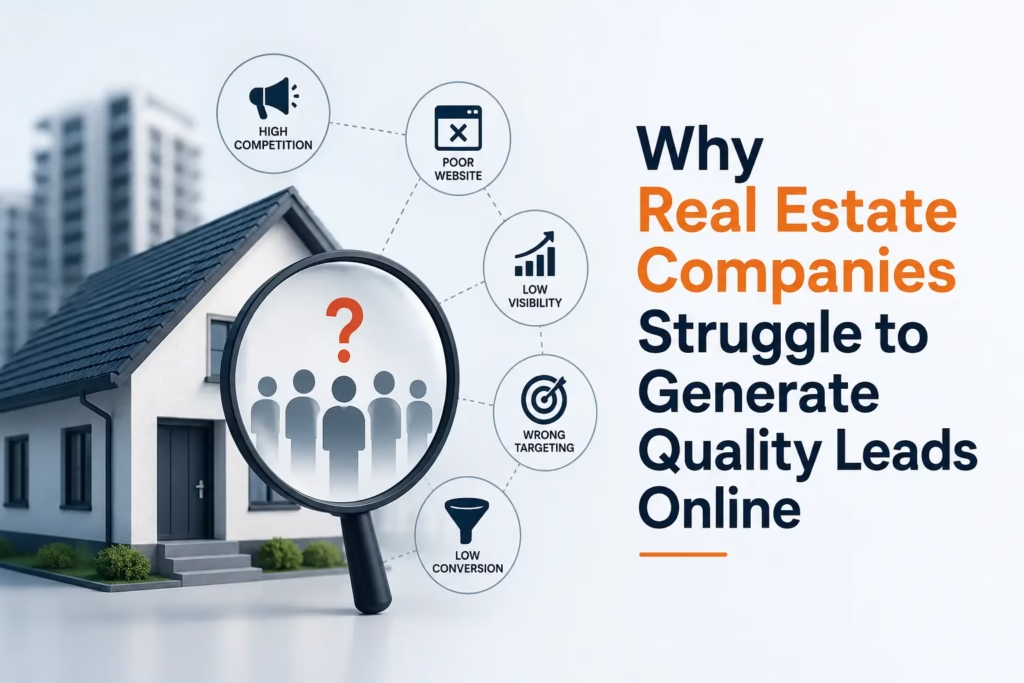
Consumer expectations have also evolved significantly. Modern buyers expect fast-loading websites, detailed property information, virtual tours, transparent pricing, customer reviews, and instant communication through live chat or messaging apps. If a real estate website fails to meet these expectations, potential customers can quickly move on to a competitor with just a few clicks.
The good news is that these challenges are not impossible to overcome. By implementing a comprehensive digital marketing strategy that combines SEO, local SEO, content marketing, paid advertising, social media marketing, email automation, and conversion optimization, real estate companies can consistently attract high-intent prospects and convert them into loyal clients.
In this guide, we’ll explore the most common reasons why real estate companies struggle to generate quality leads online. More importantly, we’ll provide practical, actionable strategies to help you improve your online visibility, increase lead quality, boost conversion rates, and build a sustainable pipeline of buyers and sellers. Whether you’re an independent real estate agency, a property developer, or a large brokerage firm, these insights will help you strengthen your digital presence and achieve long-term growth in an increasingly competitive market.
Why Quality Leads Matter in Real Estate
Generating thousands of website visitors means nothing if none of them are ready to buy or sell.
Quality leads are people who:
- Have genuine buying or selling intent
- Fit your target market
- Are financially qualified
- Need your services soon
- Are likely to convert
For real estate companies, one quality lead can result in a high-value property sale worth lakhs or even crores. That’s why lead quality is always more important than lead quantity.
1. Poor Website Experience
Your website is your digital office.
Unfortunately, many real estate companies still have websites that are:
- Slow to load
- Difficult to navigate
- Not mobile-friendly
- Missing property filters
- Outdated in design
- Confusing for users
Visitors often leave within seconds if they can’t quickly find what they’re looking for.
How to Fix It
- Improve page speed
- Make your website mobile responsive
- Add advanced property search filters
- Include high-quality images
- Use clear call-to-action buttons
- Simplify navigation
2. Weak SEO Strategy
One of the biggest reasons real estate companies struggle online is poor SEO.
Many businesses focus only on broad keywords like:
- Real Estate
- Property
- Homes for Sale
These keywords are extremely competitive.
Instead, target long-tail keywords such as:
- Luxury apartments in Mumbai
- 2 BHK flats in Pune
- Commercial office space in Bangalore
- Affordable homes in Hyderabad
Long-tail keywords attract users who are closer to making a purchase.
3. Ignoring Local SEO
Real estate is location-based.
If someone searches:
- Real estate company near me
- Property dealer in Indore
- Flats in Bhopal
Google prioritizes businesses with strong local SEO.
Many real estate companies forget to optimize:
- Google Business Profile
- Local keywords
- Customer reviews
- Local landing pages
- Maps optimization
Without local SEO, your competitors capture nearby customers.
4. Poor Quality Content
Many websites only list properties.
Modern buyers want information.
They search for:
- Best places to invest
- Home buying tips
- Loan eligibility
- Property tax
- Legal documents
- Area guides
Publishing helpful blogs builds trust and improves search rankings.
Great content positions real estate companies as industry experts instead of just sales businesses.
5. Weak Social Media Presence
Many companies simply post property photos every day.
People don’t follow brands just to see advertisements.
Instead, create content like:
- Property tours
- Investment tips
- Client testimonials
- Market updates
- Interior design ideas
- Neighborhood highlights
- Live Q&A sessions
Engaging content builds trust and encourages inquiries.
6. Poor Lead Capture Strategy
A visitor may like your property but leave without contacting you.
Why?
Because many websites lack effective lead capture elements.
Examples include:
- Contact forms
- Free consultation booking
- Property brochures
- Downloadable buying guides
- WhatsApp chat
- Instant callback options
Every page should encourage users to take the next step.
7. No Lead Nurturing Process
Not every visitor buys immediately.
Some buyers take weeks or months before making a decision.
Many real estate companies lose these prospects because they never follow up.
A proper nurturing system includes:
- Email campaigns
- WhatsApp updates
- SMS reminders
- New property alerts
- Personalized recommendations
Consistent follow-up increases conversion rates significantly.
8. Running Ads Without a Strategy
Paid advertising can generate excellent leads—but only when done correctly.
Common mistakes include:
- Targeting everyone
- Poor ad creatives
- Weak landing pages
Successful campaigns target users based on:
- Location
- Budget
- Interests
- Search behavior
- Buying stage
9. Lack of Trust Signals
Buying property involves significant financial decisions.
People only contact businesses they trust.
Ways to build credibility include:
- Client testimonials
- Google reviews
- Project completion photos
- Awards and certifications
- Video testimonials
- Success stories
- Builder partnerships
Trust can dramatically improve lead conversion.
10. Not Tracking Marketing Performance
Many businesses don’t know:
- Which page generates leads
- Which keywords drive traffic
- ads convert
- Why visitors leave
Without analytics, marketing becomes guesswork.
Track metrics such as:
- Organic traffic
- Bounce rate
- Conversion rate
- Cost per lead
- Lead quality
- ROI
Data-driven decisions lead to better results.
Best Digital Marketing Strategies for Real Estate Companies
To consistently generate quality leads, real estate companies should implement:
Search Engine Optimization (SEO)
Optimize your website with relevant keywords, improve page speed, and publish valuable content to increase organic visibility.
Local SEO
Claim and optimize your Google Business Profile, encourage customer reviews, and create location-specific pages to attract nearby buyers.
Content Marketing
Publish blogs, neighborhood guides, buying tips, investment insights, and FAQs to answer customer questions and build authority.
Social Media Marketing
Use platforms like Instagram, Facebook, and LinkedIn to showcase listings, share client success stories, and engage with your audience.
Google Ads
Run search campaigns targeting high-intent keywords to capture users actively looking for properties.
Email Marketing
Stay connected with prospects through newsletters, new listing alerts, and personalized recommendations.
Video Marketing
Create virtual property tours, market updates, and educational videos to increase engagement and trust.
Marketing Automation
Use CRM tools to automate follow-ups, segment leads, and improve response times.
Common Mistakes Real Estate Companies Should Avoid
Not tracking campaign performance
Ignoring SEO
Not optimizing for mobile users
Using poor-quality images
Slow-loading websites
No clear call-to-action
Inconsistent social media activity
Targeting broad keywords only
Neglecting local SEO
Failing to follow up with leads
Final Thoughts
The online real estate market is more competitive than ever, but it also offers tremendous opportunities. Success depends on more than just listing properties—it requires a strategic digital presence that attracts, engages, and converts potential buyers.
By investing in SEO, local optimization, quality content, responsive websites, targeted advertising, and consistent lead nurturing, real estate companies can build a sustainable pipeline of high-quality leads and outperform competitors.
If your business isn’t generating the results you expect, now is the time to review your digital marketing strategy and focus on delivering value at every stage of the customer journey.
How Stubbspire Can Help Real Estate Companies
At Stubbspire, we help real estate companies generate high-quality leads through tailored digital marketing strategies. From SEO and Local SEO to Google Ads, social media marketing, website optimization, and content marketing, our team focuses on attracting the right audience and increasing conversions. We also optimize your website for better user experience, improve your Google rankings, and create high-converting campaigns that turn visitors into genuine buyers and sellers. With data-driven strategies and continuous performance tracking, Stubbspire helps your real estate business grow sustainably and stay ahead of the competition.
Frequently Asked Questions (FAQs)
1. Why do real estate companies struggle to generate quality leads online?
Common reasons include poor SEO, weak local visibility, outdated websites, ineffective advertising, and lack of lead nurturing.
2. How can real estate companies improve online lead generation?
By investing in SEO, local SEO, content marketing, social media, paid advertising, and conversion-optimized landing pages.
3. Is SEO important for real estate companies?
Yes. SEO helps real estate companies rank higher in search results, attract qualified traffic, and generate consistent organic leads.
4. What is the best digital marketing strategy for real estate companies?
A combination of SEO, Google Ads, local SEO, content marketing, social media marketing, email campaigns, and CRM-based lead nurturing delivers the best long-term results.
5. How long does SEO take to generate leads for real estate companies?
SEO typically takes 3 to 6 months to show meaningful improvements, depending on competition, website quality, and the consistency of optimization efforts.
Author Bio
Stubbspire Digital Marketing Agency is a results-driven digital marketing agency specializing in SEO, Local SEO, social media marketing, lead generation, and website optimization. We help real estate companies and businesses improve their online visibility, attract high-quality leads, and grow through data-driven digital strategies.


Greetings! Very helpful advice on this article! It is the little changes that make the biggest changes. Thanks a lot for sharing!