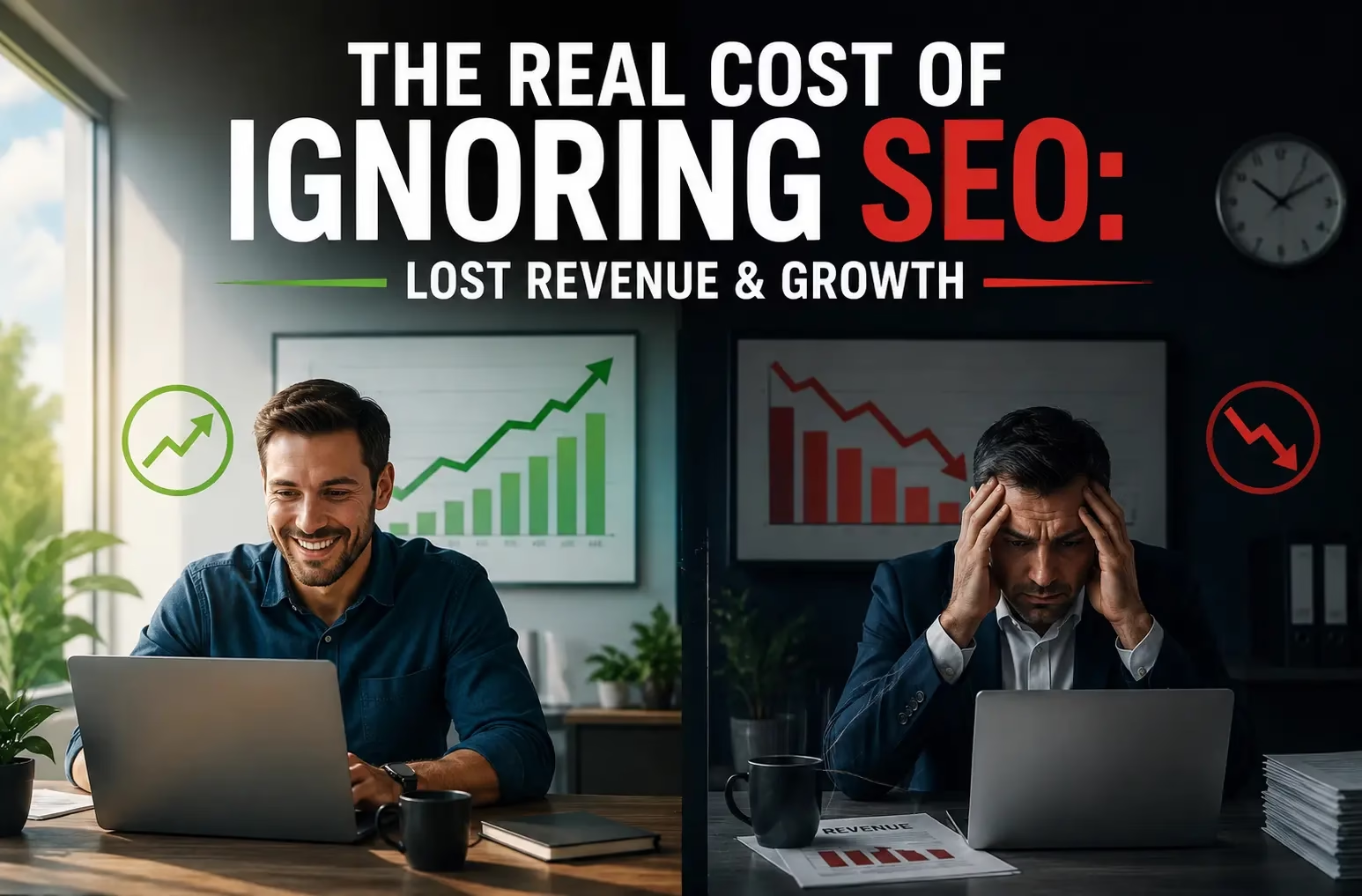
SEO is no longer an optional marketing strategy—it’s the foundation of long-term online business success. In today’s highly competitive digital landscape, simply having a website isn’t enough. If your business isn’t visible on search engines like Google when potential customers are actively searching for your products or services, you’re losing valuable opportunities every single day.
While many businesses focus on paid advertising or social media marketing, they often overlook the lasting impact of SEO. The result? Reduced website traffic, fewer qualified leads, lower conversions, and missed revenue that quietly benefits their competitors instead.
Every day, millions of users turn to search engines to find answers, compare products, read reviews, and make purchasing decisions. Research consistently shows that most users click on results appearing on the first page of Google, while websites on the second page receive only a small fraction of the traffic.
If your business doesn’t rank for relevant keywords, your competitors will attract those potential customers first. This hidden loss is one of the biggest reasons businesses struggle to grow online, even when they offer exceptional products or services.
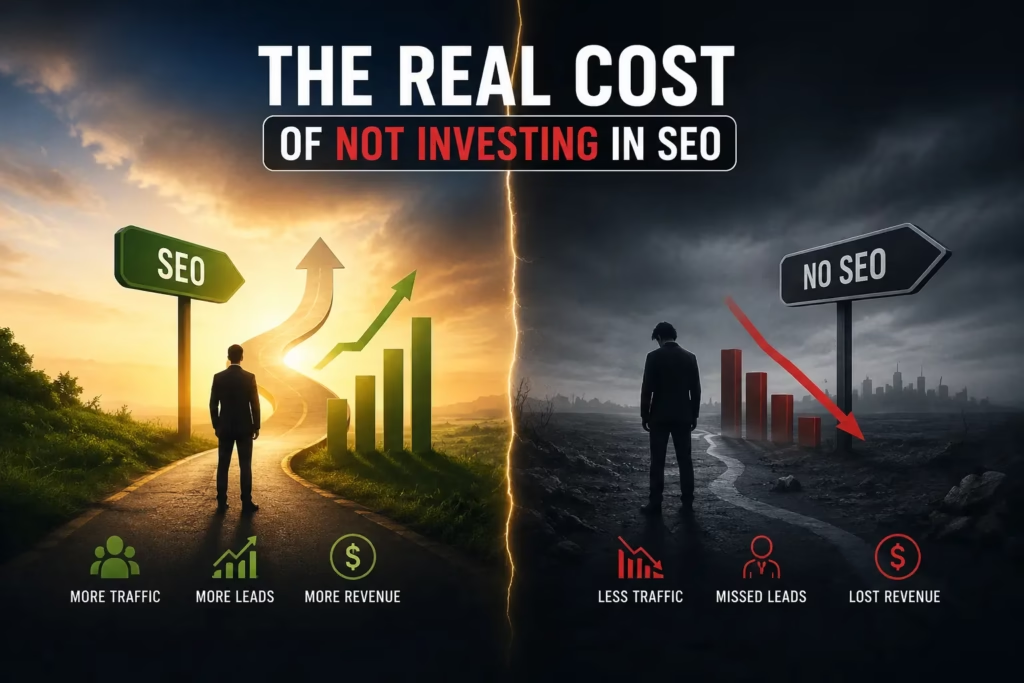
One of the most common misconceptions is that SEO is expensive. In reality, the true expense lies in not investing in it. Businesses that delay SEO often spend significantly more on paid advertising just to maintain visibility. Once those ad campaigns stop, so does the traffic. SEO, on the other hand, builds a strong digital foundation that continues driving organic visitors, qualified leads, and sales long after the initial optimization work is completed. This is why understanding SEO ROI is essential—it’s about measuring the long-term value and sustainable growth generated from your investment, rather than focusing only on the upfront cost.
Another important factor to consider is SEO cost vs return. While SEO requires consistent effort, content creation, technical improvements, and ongoing optimization, the returns can far outweigh the investment over time. A well-optimized website can rank for hundreds of relevant keywords, generate thousands of monthly visitors, and attract high-intent customers without paying for every click. Unlike traditional advertising, where visibility ends when your budget runs out, SEO continues to deliver results, making it one of the most cost-effective digital marketing strategies available.
The benefits of SEO extend far beyond higher rankings. Effective SEO improves your website’s user experience, increases brand credibility, strengthens customer trust, enhances website performance, and helps establish your business as an authority in your industry. It also supports every stage of the customer journey, from creating awareness to generating qualified leads and driving repeat business. Whether you’re a local business, an eCommerce store, or a service-based company, SEO creates a sustainable growth engine that keeps working for your business 24/7.
In this comprehensive guide, we’ll uncover the real cost of not investing in SEO, explain why delaying SEO can quietly drain your business growth, and explore how focusing on SEO ROI, understanding SEO cost vs return, and leveraging the long-term benefits of SEO can help you attract more customers, outperform competitors, and build lasting online success. If you want your business to grow consistently in an increasingly competitive digital world, investing in SEO isn’t just a smart decision—it’s a necessity.
Why Businesses Still Ignore SEO
Despite the growing importance of digital marketing, many businesses continue to underestimate the value of SEO (Search Engine Optimization). They often view it as an optional expense rather than a long-term investment that drives sustainable growth. While competitors improve their online visibility and attract high-intent customers, businesses that ignore SEO gradually lose traffic, leads, and revenue without realizing the true impact.
One of the biggest reasons businesses avoid SEO is the expectation of instant results. Unlike paid advertising, which can generate traffic almost immediately, SEO is a long-term strategy that takes time to build authority and improve rankings. Many business owners become discouraged when they don’t see results within a few weeks and choose to stop investing before the strategy has a chance to deliver meaningful outcomes.
Another common misconception is that SEO is too expensive. In reality, the SEO cost vs return often favors businesses that invest consistently. While SEO requires an upfront investment in keyword research, content creation, technical optimization, and link building, it continues to generate organic traffic long after the work is completed. Businesses that avoid SEO frequently end up spending much more on paid advertising to maintain visibility, resulting in higher customer acquisition costs over time.
Many companies also believe that having a visually appealing website is enough to attract customers. However, even the most professionally designed website cannot generate leads if potential customers cannot find it on search engines. Without proper SEO optimization, your website may remain virtually invisible, allowing competitors to capture the audience searching for the products or services you offer.
Some businesses rely heavily on social media or paid advertising and assume these channels can replace SEO. While both are valuable marketing tools, they serve different purposes. Social media helps build engagement, and paid ads provide immediate visibility, but both require continuous spending and effort. SEO, on the other hand, creates a strong foundation for long-term organic growth by helping your website rank for relevant search queries and attract visitors without paying for every click.
Finally, many business owners simply don’t understand the long-term benefits of SEO or how to measure SEO ROI. Because SEO delivers gradual and compounding results, its true value is often overlooked. A well-executed SEO strategy improves search rankings, strengthens brand credibility, increases website traffic, generates qualified leads, and drives consistent revenue for years. Businesses that delay SEO often discover too late that catching up with competitors who have invested consistently is far more difficult and expensive than starting early.
Ignoring SEO may seem like a way to save money today, but in reality, it creates hidden costs that continue to grow over time. Investing in SEO is not just about ranking higher on Google—it’s about building a sustainable online presence that supports long-term business success.
The Hidden Costs of Not Investing in SEO
Many businesses believe that skipping SEO (Search Engine Optimization) helps reduce marketing expenses. However, the opposite is often true. While the savings may seem beneficial in the short term, the long-term consequences can be far more costly. Every day your website isn’t optimized for search engines, you’re missing opportunities to attract potential customers, generate qualified leads, and increase revenue. These losses often go unnoticed because they happen gradually, making SEO one of the most overlooked investments in digital marketing.
One of the biggest hidden costs of not investing in SEO is the loss of organic traffic. Search engines like Google are where millions of users begin their buying journey. If your website doesn’t appear on the first page for relevant keywords, potential customers are far more likely to visit your competitors’ websites instead. This means fewer visitors, fewer inquiries, and fewer sales—all because your business isn’t visible when it matters most.
Another significant cost is the increasing expense of customer acquisition. Without SEO, businesses often depend heavily on paid advertising to generate traffic and leads. While paid ads can deliver immediate results, they require continuous spending. The moment your advertising budget stops, so does your visibility. In contrast, SEO continues to attract visitors long after your content has been published, providing a much stronger SEO ROI over time. Investing in SEO reduces your dependence on paid campaigns and creates a sustainable source of high-quality traffic.
Ignoring SEO also means losing valuable opportunities to build trust and authority. Modern consumers trust businesses that appear at the top of search results because they associate higher rankings with credibility and expertise. When your competitors consistently rank above you, they become the preferred choice in the minds of potential customers. Over time, this weakens your brand’s online presence and makes it harder to earn customer confidence.
Another hidden cost is falling behind your competitors. Businesses that invest in SEO continuously improve their websites, publish valuable content, optimize user experience, and earn backlinks that strengthen their authority. As their rankings improve, it becomes increasingly difficult and expensive for businesses that ignored SEO to catch up. What could have been achieved with steady optimization over time often requires much greater effort and investment later.
The SEO cost vs return becomes even more apparent when considering the lifetime value of optimized content. A single well-optimized blog post or service page can generate traffic, leads, and sales for years with minimal ongoing costs. Unlike traditional marketing campaigns that end when the budget runs out, SEO compounds over time, making it one of the highest-return digital marketing investments available.
Ultimately, the benefits of SEO extend far beyond search rankings. SEO helps increase website traffic, improve user experience, strengthen brand credibility, attract high-intent customers, and drive consistent business growth. The real cost of ignoring SEO isn’t just lower rankings—it’s the continuous loss of revenue, missed opportunities, and competitive advantage. Investing in SEO today lays the foundation for long-term success, while delaying it only allows those hidden costs to grow.
| Business Area | Without SEO | With SEO |
|---|---|---|
| Website Traffic | Low and inconsistent | Steady organic growth |
| Lead Generation | Limited inquiries | Consistent qualified leads |
| Brand Visibility | Hard to find online | Higher search rankings |
| Customer Trust | Lower credibility | Strong brand authority |
| Marketing Costs | High dependency on ads | Reduced paid advertising costs |
| Business Growth | Slow and unpredictable | Sustainable long-term growth |
Losing Organic Traffic to Competitors
Organic traffic is one of the most valuable assets a business can have because it brings visitors who are actively searching for your products or services. When you don’t invest in SEO, your website becomes less visible in search engine results, making it easier for competitors to capture the attention of your potential customers. Every day your website fails to rank for relevant keywords is another day your competitors gain traffic, leads, and sales that could have been yours.
Search engines like Google prioritize websites that offer high-quality content, a great user experience, fast loading speeds, and strong authority. Businesses that consistently invest in SEO improve these factors over time, allowing them to secure higher rankings for important keywords. As they appear at the top of search results, they receive a larger share of organic traffic, while businesses that neglect SEO gradually disappear from their audience’s view.
The loss of organic traffic affects much more than just website visits. Fewer visitors mean fewer inquiries, reduced conversions, and lower revenue. It also weakens your brand’s online presence, making it harder to compete in your industry. Unlike paid advertising, which stops generating traffic when your budget runs out, organic traffic continues to grow through consistent SEO efforts, delivering long-term value and a higher SEO ROI.
Over time, the gap between businesses that invest in SEO and those that don’t becomes increasingly difficult to close. Competitors continue building authority, earning backlinks, and publishing optimized content, making it more challenging to outrank them later. By investing in SEO today, you can improve your search visibility, attract qualified visitors, and prevent your competitors from capturing valuable organic traffic that should be driving your business growth.
Paying More for Customer Acquisition
One of the biggest hidden costs of ignoring SEO is the rising expense of acquiring new customers. When your website doesn’t rank organically on search engines, your business often becomes heavily dependent on paid advertising, such as Google Ads, social media campaigns, or other paid marketing channels. While these methods can generate quick results, they require continuous investment. The moment you stop paying, your visibility disappears, and so does your traffic.
In contrast, SEO helps your website attract visitors naturally through organic search results. By optimizing your website with relevant keywords, high-quality content, and a strong user experience, you can consistently reach people who are actively searching for your products or services without paying for every click. This not only reduces your overall marketing expenses but also improves the quality of your leads, as organic visitors often have a higher intent to purchase.
Understanding SEO cost vs return is essential when evaluating your marketing strategy. Although SEO requires an upfront investment, its long-term value far outweighs the initial cost. A well-optimized website can continue generating qualified traffic, leads, and sales for months or even years, making it one of the most cost-effective digital marketing channels. This sustained performance leads to a stronger SEO ROI, as the cost of acquiring each customer decreases over time.
Businesses that invest in SEO build a reliable source of organic traffic, reducing their dependence on expensive paid campaigns. Instead of constantly increasing advertising budgets to maintain visibility, they benefit from a steady flow of potential customers who discover their business through search engines. By investing in SEO early, you can lower customer acquisition costs, maximize your marketing budget, and create a scalable foundation for long-term business growth.
Missing High-Intent Leads
Not all website visitors have the same value. Some people are simply browsing, while others are actively looking for a product or service and are ready to make a purchase. These potential customers are known as high-intent leads, and they are among the most valuable prospects for any business. When you don’t invest in SEO, you miss the opportunity to connect with these users at the exact moment they are searching for what you offer.
Every day, millions of people use search engines like Google with specific queries such as “best digital marketing agency,” “SEO services near me,” or “affordable website development company.” These searches indicate strong buying intent because users are actively looking for solutions and are often close to making a decision. If your website doesn’t appear in the search results for these keywords, your competitors are more likely to earn their trust, capture the lead, and close the sale.
Missing high-intent leads doesn’t just reduce your website traffic—it directly affects your revenue and business growth. Unlike visitors from random advertising campaigns, organic search users often convert at higher rates because they are already interested in your products or services. This is one of the key reasons why businesses that invest in SEO often achieve a higher SEO ROI compared to relying solely on paid advertising or social media marketing.
The long-term benefits of SEO include attracting qualified traffic, increasing conversion rates, and generating a steady stream of potential customers without paying for every click. By optimizing your website for relevant keywords and creating valuable content that answers your audience’s questions, you can reach high-intent users before your competitors do. Investing in SEO ensures your business is visible when customers are ready to take action, helping you turn more searches into leads, sales, and long-term growth.
Damaging Brand Trust and Authority
Your brand’s reputation is one of its most valuable assets, and SEO plays a crucial role in building and maintaining that trust. Today’s consumers rely on search engines to research businesses before making a purchase or contacting a service provider. When your website consistently appears on the first page of Google, it signals credibility, expertise, and reliability. On the other hand, if your business is difficult to find or doesn’t appear in search results, potential customers may question your legitimacy and choose a competitor instead.
High search rankings are often associated with industry leadership. Businesses that regularly publish valuable content, optimize their websites, and maintain a strong online presence are more likely to earn the trust of both search engines and users. Without SEO, your brand misses opportunities to showcase its expertise, answer customer questions, and establish authority in your niche. As competitors continue improving their visibility, they become the brands customers recognize and trust first.
Ignoring SEO can also weaken your online reputation over time. Even if you offer excellent products or services, limited visibility makes it harder for new customers to discover your business. Fewer website visitors mean fewer reviews, lower engagement, and reduced brand awareness. This creates a cycle where your competitors continue gaining credibility while your business struggles to build recognition. Investing in SEO helps break this cycle by increasing your online presence and positioning your brand as a trusted source of information and solutions.
One of the long-term benefits of SEO is strengthening brand authority through consistent visibility, high-quality content, and an improved user experience. As your website ranks for relevant keywords, more people discover your business, engage with your content, and develop confidence in your brand. This increased trust not only improves conversion rates but also contributes to a higher SEO ROI, as loyal customers are more likely to return and recommend your business to others. In today’s competitive digital landscape, building trust through SEO is not just an advantage—it’s essential for sustainable business growth.
SEO Cost vs Return: Is SEO Worth It?
One of the most common questions business owners ask is, “Is SEO really worth the investment?” The answer becomes clear when you compare SEO cost vs return. While SEO requires an upfront investment in keyword research, content creation, technical optimization, and ongoing improvements, the long-term returns often far exceed the initial costs. Unlike traditional advertising, SEO continues to generate value long after the work is completed, making it one of the most cost-effective digital marketing strategies available.
Many businesses hesitate to invest in SEO because they focus only on the monthly expense rather than the long-term benefits. Paid advertising may deliver immediate traffic, but every visitor comes at a cost, and your visibility disappears as soon as your advertising budget ends. SEO works differently. Once your website earns strong rankings, it can continue attracting organic traffic, qualified leads, and potential customers for months or even years without paying for every click. This is what makes SEO a valuable long-term business asset rather than a recurring expense.
When evaluating SEO cost vs return, it’s important to look beyond rankings and consider the overall business impact. A successful SEO strategy increases website visibility, improves user experience, strengthens brand credibility, attracts high-intent customers, and generates consistent leads. Over time, these benefits reduce customer acquisition costs and increase conversions, resulting in a stronger SEO ROI. Instead of constantly spending more on advertising, your website becomes a reliable source of sustainable traffic and revenue.
The benefits of SEO also compound over time. Every optimized blog post, landing page, or service page adds to your website’s authority and creates new opportunities to rank for relevant keywords. As your online presence grows, so does your ability to attract qualified visitors and outperform competitors. While SEO requires patience and consistency, its long-term return on investment is often significantly higher than many other marketing channels.
Ultimately, SEO is not just about improving search engine rankings—it’s about building a sustainable growth engine for your business. When you compare the SEO cost vs return, the real question isn’t whether you can afford to invest in SEO—it’s whether you can afford not to. Businesses that invest in SEO today are better positioned to generate consistent traffic, increase revenue, and achieve long-term success in an increasingly competitive digital marketplace.
Top Benefits of SEO for Every Business
Investing in SEO is one of the smartest decisions a business can make for long-term growth. Unlike short-term marketing strategies that stop delivering results when the budget runs out, SEO continues to generate value by improving your website’s visibility, attracting qualified visitors, and building lasting credibility. Whether you’re a startup, a local business, or an established enterprise, the benefits of SEO extend far beyond higher search rankings—they create a strong foundation for sustainable business success.
One of the biggest advantages of SEO is increased organic traffic. By optimizing your website for relevant keywords, your business becomes more visible to people actively searching for your products or services. These visitors are more likely to engage with your content, make inquiries, and convert into paying customers because they already have a clear intent to find a solution.
SEO also improves your brand’s credibility and authority. Websites that consistently appear on the first page of Google are often perceived as more trustworthy and reliable. Through high-quality content, technical optimization, and a better user experience, SEO helps establish your business as an industry leader while strengthening customer confidence in your brand.
Another important benefit is a higher SEO ROI. Unlike paid advertising, where traffic stops once your budget ends, SEO continues to attract visitors over time without additional costs for every click. This makes SEO one of the most cost-effective marketing investments available. When you compare SEO cost vs return, the long-term value becomes clear—consistent organic traffic, lower customer acquisition costs, and sustainable revenue growth.
Additionally, SEO enhances website performance by improving page speed, mobile responsiveness, and overall user experience. These improvements not only help your search rankings but also encourage visitors to stay longer, engage with your content, and complete desired actions such as making a purchase or submitting an inquiry.
How to Start Investing in SEO
Starting your SEO journey doesn’t have to be complicated. The first step is understanding your target audience and identifying the keywords they use when searching for products or services related to your business. Conducting thorough keyword research allows you to create content that answers your audience’s questions and matches their search intent.
Next, optimize your website by improving essential on-page SEO elements such as title tags, meta descriptions, headings, image alt text, internal links, and content structure. Your website should also load quickly, be mobile-friendly, and provide an excellent user experience, as these factors directly influence both search rankings and customer satisfaction.
Creating high-quality, informative content is another essential part of a successful SEO strategy. Regularly publishing blog posts, service pages, guides, and FAQs helps your website rank for more keywords while establishing your business as a trusted source of information. Fresh, valuable content also keeps visitors engaged and encourages them to return.
Technical SEO is equally important. Regular website audits help identify issues such as broken links, duplicate content, crawl errors, and slow-loading pages that may prevent search engines from properly indexing your site. Fixing these issues improves website performance and supports better rankings.
Finally, SEO should be viewed as an ongoing process rather than a one-time task. Search engine algorithms, customer behavior, and industry trends constantly evolve, so continuous optimization is necessary to maintain and improve your rankings. By consistently monitoring performance, updating content, and refining your strategy, you can maximize SEO ROI, enjoy the long-term benefits of SEO, and achieve the best possible SEO cost vs return for your business.
Final Thoughts
Ignoring SEO may seem like a way to save money, but it often leads to lost traffic, missed leads, reduced revenue, and slower business growth. When you compare SEO cost vs return, it’s clear that SEO is a long-term investment that delivers lasting value. By investing in SEO today, you can improve your SEO ROI, strengthen your online presence, and enjoy the many benefits of SEO. The sooner you start, the sooner your business can attract more customers, outperform competitors, and achieve sustainable growth.
Frequently Asked Questions (FAQs)
1. What is SEO, and why is it important for businesses?
SEO (Search Engine Optimization) is the process of improving your website’s visibility on search engines like Google. It helps businesses attract organic traffic, generate qualified leads, and increase sales without relying solely on paid advertising.
2. Is SEO worth the investment?
Yes. When you compare SEO cost vs return, SEO offers one of the highest long-term returns in digital marketing. It continues to drive traffic, leads, and revenue long after the initial investment.
3. How long does SEO take to show results?
SEO is a long-term strategy. Most businesses start seeing noticeable improvements within 3 to 6 months, depending on their industry, competition, and the current state of their website.
4. What are the biggest benefits of SEO?
The major benefits of SEO include increased organic traffic, better search rankings, improved brand credibility, higher-quality leads, lower customer acquisition costs, and sustainable business growth.
5. What is SEO ROI?
SEO ROI (Return on Investment) measures the value your business gains from SEO compared to the amount invested. A successful SEO strategy delivers long-term traffic, leads, and revenue, making it one of the most profitable marketing channels.
6. Can I rely only on paid advertising instead of SEO?
Paid advertising provides immediate visibility, but traffic stops when your budget ends. SEO creates long-term organic visibility, making it a more sustainable and cost-effective strategy for consistent business growth.
7. How can Stubbspire Digital Marketing Agency help my business?
Stubbspire Digital Marketing Agency offers customized SEO solutions, including keyword research, technical SEO, on-page optimization, content marketing, local SEO, and performance tracking to help your business improve rankings, increase traffic, and maximize SEO ROI.
Author Bio
Stubbspire Digital Marketing Agency is a results-driven digital marketing agency specializing in SEO, local SEO, website development, content marketing, PPC, and social media marketing. Our team helps businesses improve their online visibility, generate qualified leads, and achieve sustainable growth through data-driven digital strategies. Whether you’re a startup or an established brand, Stubbspire is committed to delivering measurable results and maximizing your return on investment.