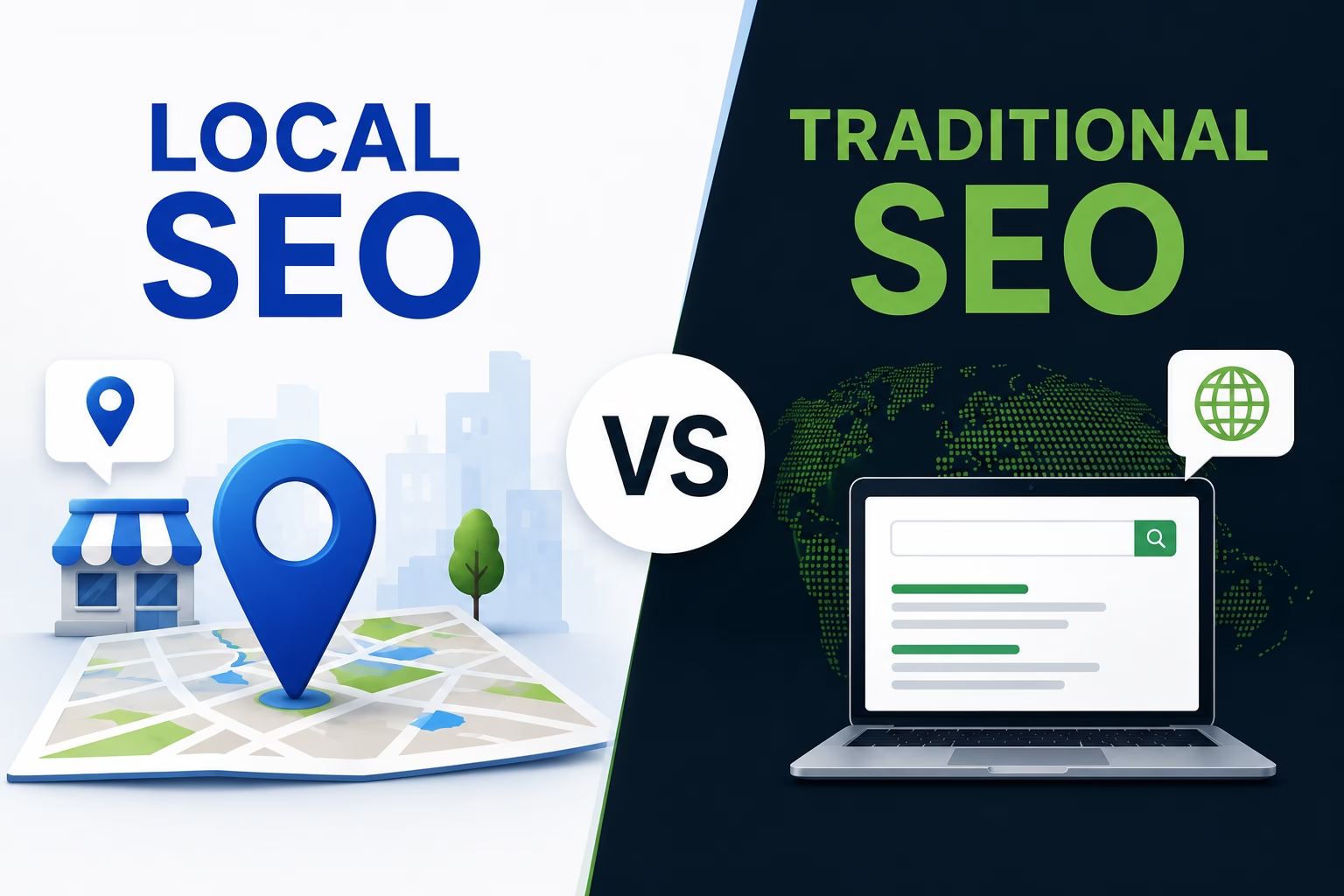
Businesses today understand the importance of search engine optimization, but many still struggle to determine whether they need Local SEO vs Traditional SEO ‘While both strategies help improve online visibility, they serve different purposes and target different audiences. Choosing the right approach can significantly impact your website traffic, lead generation, and overall business growth.
Traditional SEO focuses on improving rankings for broader searches and attracting visitors from multiple cities, states, or even countries. It works best for businesses that sell products online, provide nationwide services, or operate in highly competitive industries. On the other hand, Local SEO is designed to help businesses appear in location-based searches such as “best dentist near me” or “digital marketing agency in Indore.”
If your customers primarily come from a specific city or region, investing in Local SEO services can help your business attract nearby customers who are actively searching for your products or services. A well-planned Local SEO strategy improves visibility in local search results, increases website visits, and drives more phone calls, inquiries, and store visits.
One of the most important components of local search success is Google Business Profile optimization. A fully optimized profile with accurate business information, customer reviews, high-quality images, and regular updates can improve your chances of appearing in Google’s Local Pack and Maps results. Businesses that ignore their Google Business Profile often miss valuable opportunities to connect with potential customers.
In this guide, we’ll compare Local SEO and Traditional SEO, explain their key differences, and help you determine which strategy is best suited for your business goals.
What Is Traditional SEO?
Traditional SEO is the process of optimizing a website to improve its visibility in search engine results for broad, non-location-specific keywords. Unlike local SEO, which focuses on attracting customers from a particular geographic area, traditional SEO aims to reach audiences across multiple cities, states, or even countries.
The primary goal of traditional SEO is to increase organic traffic by ranking higher for industry-related search terms. It is commonly used by eCommerce businesses, SaaS companies, online service providers, and brands that operate on a national or global scale.
Traditional SEO involves several optimization techniques, including:
- Keyword research and targeting
- High-quality content creation
- On-page SEO optimization
- Technical SEO improvements
- Link building and outreach
- Website speed and mobile optimization
For example, a company selling project management software may target keywords such as “best project management tools” or “project management software for small businesses.” Since these searches are not tied to a specific location, traditional SEO helps businesses attract potential customers from anywhere in the world.
Businesses that want to expand their reach beyond a local market and compete for broader search terms can benefit significantly from a well-planned traditional SEO strategy.
What Is Local SEO?
Local SEO is the process of optimizing a business’s online presence to improve its visibility in location-based search results. Unlike traditional SEO, which targets a broader audience, local SEO focuses on attracting customers from a specific city, region, or service area.
A strong Local SEO strategy helps businesses appear in searches such as “restaurants near me,” “plumber in Bhopal,” or “digital marketing agency in Indore.” It is especially beneficial for local businesses, service providers, healthcare clinics, law firms, restaurants, and companies that rely on nearby customers.
One of the most important aspects of local SEO is Google Business Profile optimization. An optimized profile with accurate business details, updated operating hours, customer reviews, photos, and regular posts can improve your chances of appearing in Google’s Local Pack and Maps results.
Common local SEO activities include:
- Google Business Profile optimization
- Local keyword research
- Creating location-specific landing pages
- Managing online reviews and ratings
- Building local citations and directory listings
- Maintaining consistent business information across the web
Businesses looking to attract nearby customers and increase foot traffic, calls, or local inquiries can greatly benefit from professional Local SEO services and a well-executed local SEO strategy.
Key Differences Between Local SEO and Traditional SEO
Although both Local SEO and Traditional SEO help businesses improve their search engine rankings, they target different audiences and use different optimization strategies. Understanding these differences can help businesses choose the most effective approach.
1. Target Audience
Local SEO focuses on attracting customers within a specific geographic area. It is ideal for businesses such as restaurants, clinics, salons, and local service providers that depend on nearby customers.
Traditional SEO, on the other hand, targets a broader audience without location restrictions. It is commonly used by e-commerce stores, SaaS companies, and businesses that serve customers nationwide or globally.
2. Search Intent
Local SEO is designed for location-based searches where users are looking for immediate solutions nearby. Examples include searches like “best dentist near me” or “coffee shop in Mumbai.”
Traditional SEO targets users searching for information, products, or services regardless of location. Examples include “best SEO tools” or “digital marketing strategies.”
3. Ranking Factors
Local SEO rankings depend heavily on factors such as Google Business Profile optimization, customer reviews, local citations, and proximity to the searcher.
Traditional SEO rankings rely more on high-quality content, keyword optimization, backlinks, technical SEO, and website authority.
4. Search Results Appearance
Local SEO results often appear in Google Maps and the Local Pack, displaying business information, reviews, and directions.
Traditional SEO results usually appear as organic website listings, including blog posts, product pages, and service pages.
5. Competition Level
Local SEO generally involves competing with businesses in a specific city or region, making competition more manageable.
Traditional SEO often requires competing with national and international websites, which can make ranking for popular keywords more challenging.
6. Business Goals
The main goal of Local SEO is to increase phone calls, store visits, appointments, and local leads.
Traditional SEO aims to generate website traffic, improve brand awareness, and attract customers from a wider market.
Who Needs Local SEO Services?
Businesses that depend on customers from a specific city, region, or service area can benefit the most from Local SEO services. If people search for your products or services using location-based terms such as “near me” or “in [city name],” then local SEO should be an essential part of your marketing strategy.
Local SEO is particularly valuable for:
- Small and medium-sized businesses
- Restaurants and cafés
- Healthcare clinics and dentists
- Law firms and consultants
- Real estate agencies
- Home service providers such as plumbers, electricians, and contractors
- Salons, spas, and fitness centers
- Local retail stores and franchises
- Digital marketing agencies serving regional clients
A well-planned Local SEO strategy helps these businesses improve their visibility in local search results, attract nearby customers, and generate more phone calls, website visits, and inquiries. Combined with effective Google Business Profile optimization, local SEO can significantly increase a business’s chances of appearing in Google’s Local Pack and Maps listings, giving it a competitive advantage in the local market.
When Should Businesses Invest in Traditional SEO?
Businesses should invest in Traditional SEO when they want to reach customers beyond a specific geographic location. Unlike local SEO, traditional SEO focuses on improving visibility for broader search terms and attracting visitors from multiple cities, states, or even countries.
Traditional SEO is an ideal choice for:
- eCommerce stores selling products nationwide or globally
- SaaS and technology companies
- Online education and coaching platforms
- Businesses offering remote or virtual services
- National brands and franchises
- Content publishers and news websites
- Companies targeting highly competitive industry keywords
For example, a business selling accounting software across India doesn’t need to target a single city. Instead, it should optimize for keywords like “best accounting software for small businesses” to attract users from different locations.
By investing in traditional SEO, businesses can increase organic traffic, improve brand authority, and generate leads from a wider audience, making it a valuable long-term digital marketing strategy.
How to Build an Effective Local SEO Strategy
Building an effective Local SEO strategy requires more than just adding your business to Google Maps. It involves optimizing your online presence to help potential customers find your business when searching for local products or services.
Start with Google Business Profile optimization by ensuring your business name, address, phone number, website, and operating hours are accurate and up to date. Add high-quality photos, select the most relevant business categories, and encourage satisfied customers to leave reviews.
Next, conduct local keyword research and target search terms that include your city, neighborhood, or service area. Creating location-specific landing pages and publishing locally relevant content can also improve your visibility in search results.
Additionally, list your business in reputable online directories and maintain consistent information across all platforms. Regularly monitoring your performance, responding to customer reviews, and updating your profile will help strengthen your local presence over time.
Businesses that invest in professional Local SEO services can further enhance their strategy, improve local rankings, and attract more qualified leads from their target market.
Which SEO Strategy Is Right for Your Business?
Choosing the right SEO strategy depends on your business model, target audience, and growth goals. Here are the most common approaches:
1. Local SEO
Local SEO is ideal for businesses that serve customers within a specific geographic area, such as restaurants, clinics, law firms, home service providers, and retail stores.
Best for:
- Brick-and-mortar businesses
- Service-area businesses
- Multi-location companies
Key tactics:
- Optimizing business listings
- Managing customer reviews
- Building local citations
- Creating location-specific content
- Improving map visibility
2. Organic SEO
Organic SEO focuses on improving rankings for non-location-specific searches through high-quality content and technical optimization.
Best for:
- SaaS companies
- Online stores
- Publishers
- National brands
Key tactics:
- Keyword research
- Content marketing
- Technical SEO improvements
- Link building
- User experience optimization
3. E-commerce SEO
E-commerce SEO helps online stores attract buyers searching for products.
Best for:
- Online retailers
- Marketplace sellers
- Direct-to-consumer brands
Key tactics:
- Product page optimization
- Category page improvements
- Structured data implementation
- Internal linking
- Shopping-focused content
4. Enterprise SEO
Enterprise SEO supports large organizations managing thousands of pages across multiple markets.
Best for:
- Large corporations
- International brands
- Media companies
Key tactics:
- Scalable content strategies
- Automation
- Advanced analytics
- Cross-team collaboration
How to Choose the Right SEO Strategy for Your Business
Selecting the right SEO strategy depends on your business goals, target audience, and service area. While some companies benefit more from Local SEO, others achieve better results with Traditional SEO. Consider the following factors before making your decision.
1. Identify Your Target Audience
Think about who your ideal customers are and where they are located.
- If your customers are primarily from a specific city or region, Local SEO is the better option.
- If you want to attract customers from across the country or worldwide, Traditional SEO is more suitable.
For example, a dental clinic in Delhi should focus on Local SEO, while an online software company can benefit more from Traditional SEO.
2. Consider Your Business Location
Businesses with a physical storefront or office usually need Local SEO to appear in location-based searches and on Google Maps.
On the other hand, businesses that operate entirely online and do not depend on local customers should invest in Traditional SEO to increase their overall website visibility.
3. Define Your Marketing Goals
Your SEO strategy should align with your business objectives.
Choose Local SEO if your goal is to:
- Increase store visits
- Get more phone calls
- Generate appointment bookings
- Improve visibility in local searches
Choose Traditional SEO if you want to:
- Drive more website traffic
- Build brand awareness
- Reach a larger audience
- Increase online sales and leads
4. Evaluate Your Competition
Analyze who you are competing against.
If your competitors are nearby businesses serving the same area, Local SEO can help you stand out in local search results. However, if you compete with national brands and industry leaders, Traditional SEO is necessary to improve your rankings for broader keywords.
5. Consider Combining Both Strategies
Many businesses can benefit from using both Local SEO and Traditional SEO together. For example, a company with multiple locations can optimize its Google Business Profile for local searches while also publishing high-quality content to rank for industry-related keywords nationwide.
How StubbSpire Helps Businesses Improve Local Search Visibility
StubbSpire helps businesses strengthen their local online presence through a combination of optimization, content development, and reputation management.
Business Profile Optimization
Accurate and complete business information helps search engines understand your company and improves visibility in local search results.
Citation Management
Consistent business details across online directories build trust and reduce conflicting information.
Review Strategy
Encouraging and responding to customer reviews can improve credibility and influence local rankings.
Location-Focused Content
Creating pages and articles tailored to specific cities or service areas helps attract nearby customers searching for relevant services.
Performance Tracking
Monitoring rankings, website traffic, and customer actions enables businesses to refine their local SEO strategy over time.
Final Verdict: Which SEO Strategy Is Best for Your Business?
There is no one-size-fits-all answer when it comes to choosing between Local SEO and Traditional SEO. The right strategy depends on your business type, target audience, and growth objectives.
If your business serves customers within a specific city or region, Local SEO is the better choice. It helps improve visibility in local searches, attract nearby customers, and drive more phone calls, appointments, and store visits. Businesses such as restaurants, clinics, law firms, and home service providers can benefit significantly from a strong local presence.
On the other hand, Traditional SEO is ideal for businesses that want to reach a broader audience beyond a single location. E-commerce stores, SaaS companies, online educators, and national brands can use Traditional SEO to increase website traffic, build authority, and generate leads from across the country or around the world.
For many businesses, the most effective approach is a combination of both strategies. By optimizing your website for relevant industry keywords while maintaining a well-optimized Google Business Profile, you can maximize your online visibility and attract customers at both the local and national levels.
Ultimately, the best SEO strategy is the one that aligns with your business goals and helps you connect with the customers who are most likely to convert.
Frequently Asked Questions
1 How long does SEO take to show results?
SEO is a long-term strategy. Many businesses begin noticing improvements within 3–6 months, while highly competitive industries may require more time.
2 Is local SEO different from traditional SEO?
Yes. Local SEO targets searches with geographic intent and emphasizes business listings, reviews, and location relevance, while traditional SEO focuses more broadly on organic rankings.
3 Can small businesses compete with larger companies in search results?
Absolutely. Small businesses often have an advantage in local markets because they can target specific neighborhoods, cities, and customer needs more effectively.
4 Do I need both local SEO and organic SEO?
Many businesses benefit from combining both strategies. For example, a dental practice may use local SEO to attract nearby patients while publishing educational content to increase organic traffic.
5 How do I know which SEO strategy is best for my business?
Consider your customer base, service area, sales model, and marketing goals. Businesses serving local customers usually benefit most from local SEO, while companies selling nationally or globally often require a broader organic SEO strategy.
Author Bio
About the Author
The StubbSpire editorial team consists of SEO specialists, content strategists, and digital marketing professionals dedicated to helping businesses improve their online visibility and attract more qualified customers. With experience in local SEO, technical optimization, content marketing, and search analytics, the team shares practical insights, proven strategies, and industry best practices to support sustainable business growth.
For more tips on search engine optimization, local marketing, and digital growth strategies, explore the latest resources from StubbSpire.